Wednesday, March 29, 2017

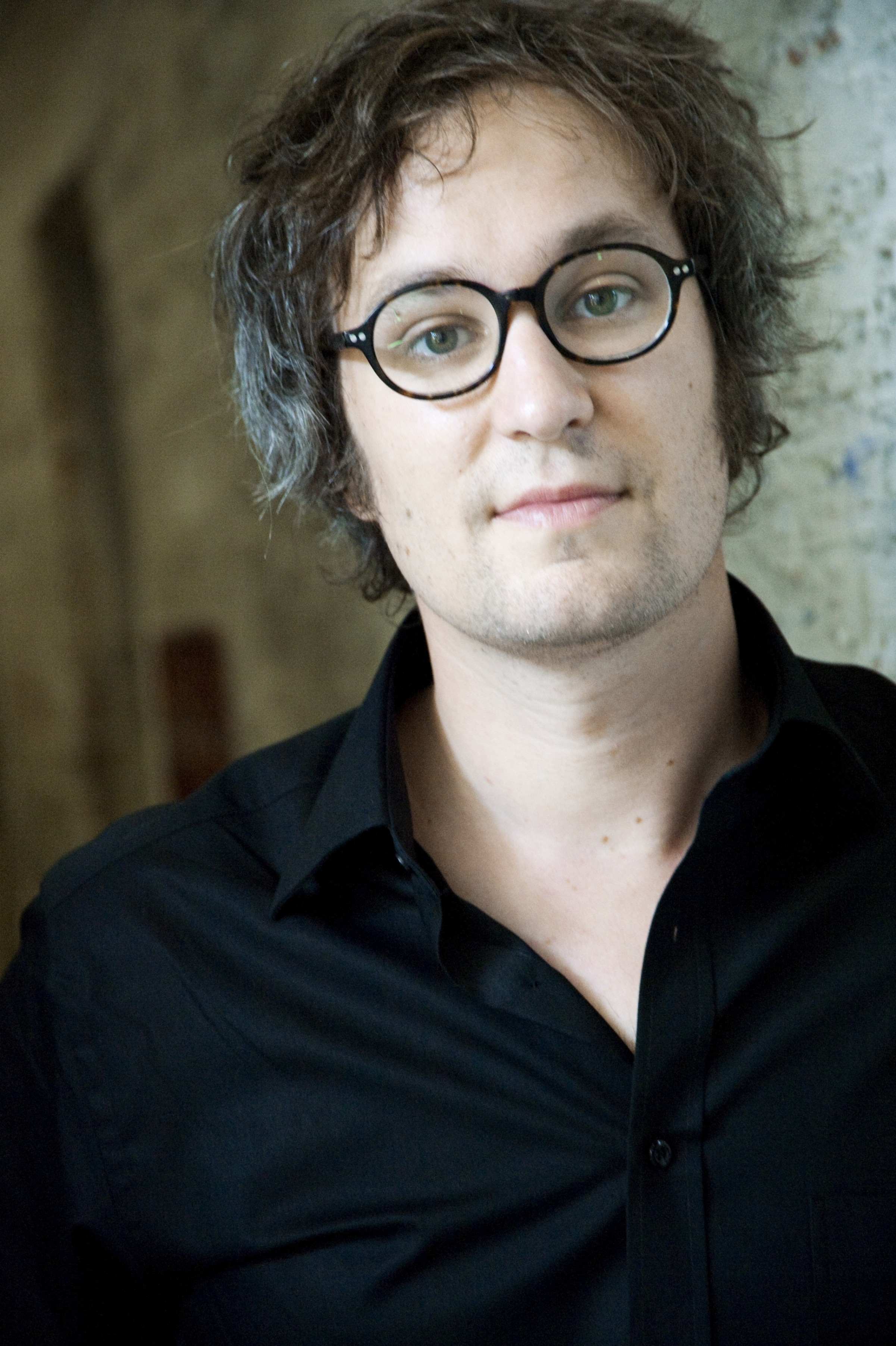
Jeffrey Mumford: Flourishing Paths


This post, next in our series of posts profiling June in Buffalo faculty composers, introduces the work of Jeffrey Mumford. Currently Distinguished Professor in the Division of Arts and Humanities at Lorain Community College, Mumford has accumulated an exceptional list of accolades, such as grants and awards from the Guggenheim Foundation, American Music Center (now part of New Music USA), Ohio Arts Council, ASCAP Foundation, Meet the Composer, American Academy of Arts & Letters, Fromm Music Foundation, Amphion Foundation, and McKim Fund (Library of Congress), and performances by orchestras such as the National Symphony Orchestra, Minnesota Orchestra, Atlanta Symphony Orchestra, Cleveland Orchestra, Saint Paul Chamber Orchestra, Cincinnati Symphony Orchestra and American Composers Orchestra. This year’s June in Buffalo festival will feature performances of three works by Mumford: a garden of flourishing paths (2008) for mixed quintet, the promise of the far horizon (2002) for string quartet, and verdant and shimmering air: four views of a reflected forest (2007) for orchestra. The composer will also give lecture on his music and give masterclasses to participant composers.


A garden of flourishing paths, striking in its approaches to harmony and texture, offers a compelling introduction to his music; a recording of the work is available here. While the work’s pitch language recalls numerous high modernist characteristics—its emphasis on tonally dissonant intervals, wide leaps, and pitch collections not reducible to a single diatonic scale—it subtly references tonal idioms, and cultivates a remarkable tension between modernist atonality and historical tonality. In the midst of the music’s overall chromatic flux, diatonic collections come subtly into focus, pulling pitches into their gravitational field, and establishing local islands of stability, as in the alternating B minor and G minor orientations of the work’s second movement. This activates a fascinating ambiguity in pitches’ functions: sometimes pitches are caught up into tonal hierarchies of scale, chord, and pitch center, and sometimes pitches are simply a singular, unrepeatable event accorded no more or less weight than surrounding pitches. Mumford pulls off this difficult balancing act with astonishing finesse. It would be easy for the tonal connotations to submerge into the dense detail, and, conversely, it would be even easier for tonal gravity to emerge as something of a “bully,” altogether wiping out the functional weight of non-diatonic pitches. However, the composer does not succumb to either pitfall: the tonal connotations are clear but not heavy handed. In other words, the piece’s engagement with tonality does not simplify or conventionalize its pitch language, but rather increases its dimensionality, as tonality enters into dialogue with other modes of listening.

In its approach to texture, the work achieves a similarly sophisticated dialogue between modernism and historical Western art music. In the first movement of a garden of flourishing paths, the music straddles the boundary between Darmstadt-school style pointillism and traditional counterpoint. The rapid succession of notes discontinuous in register and timbre recalls the former, while each instrument’s occasional coalescence into continuous, rhythmically regular sequences of pitches recalls the latter. As with the music’s approach to pitch, this dialectic asks listeners to negotiate between incompatible modes of listening: there is never a definitively “correct,” objective standpoint from which to listen. Dialectical oppositions pointillism/counterpoint, tonality/atonality, and, perhaps additionally, melodic figure/physical energy create a rich interplay of surface and depth, of expectation and realization in this texture. Perhaps this multi-dimensionality embodies the “flourishing paths” of the work’s title.

To learn more about Jeffrey Mumford’s work, check out his website (with numerous recordings in the “Works and First Performances” section), read interviews with him, and check out his recent talk about diversity and inclusion in new music. 

Monday, March 27, 2017

Hilda Paredes: Revelations in Time


The Center for 21st Century Music welcomes guest composer Hilda Paredes later this week for a masterclass and lecture with graduate composition students. Her visit coincides with the Arditti Quartet’s residency at the Center, during which the quartet will give a concert featuring Paredes’s 2014 piece Bitacora capilar (Capillary Log). More detail about the Arditti Quartet residency is available on a past post on this blog.


Paredes is one of the leading Mexican composers of her generation. Based in London since 1979, her music has been recognized with awards from the Arts Council of Great Britain, the Rockefeller Fund for Culture Mexico/USA, the Guggenheim Foundation, and the Sistema Nacional de Creadores (FONCA), performances by ensembles such as the Arditti Quartet, Aventure, Court Circuit, Ensemble Modern, Ensemble Recherche, Ensemble Signal, Ensamble Sospeso,  London Sinfonietta, Lontano,  Neue Vocalsolisten, Ensamble Sospeso, L’Instant donné, London Sinfonietta, Lontano, and the English National Opera, at festivals such as Huddersfield, Edinburgh, Eclat, Ultraschall, Musica, Wien Modern, Akiyoshidai, Takefu Festivals, Archipel ans Music monat, Warsaw Autumn, Ultima, Melbourne, Ars Musica, and Festival Internacional Cervantino. She has been visiting professor at the Escola Superior de Música de Catalunya en Barcelona, and in 2007 was Darius Milhuad Visiting Professor at Mills College, a prestigious position previously held by Pauline Oliveros, Roscoe Mitchell, George Lewis, Gordon Mumma, and Alvin Curran.


Paredes’s piece Revelación (2010-2011) for ensemble offers a clear introduction to how the composer approaches material and form. The excerpt above thematizes a dialectic between a linear, accumulative harnessing of kinetic energies on a local level and a paratactic, non-directional succession of contrasting panels on a global level. The opening panel (0:00-1:41) presents an increasingly directed accumulation of melodic mobility. By 1:41 the energy disperses, and in a seemingly unmotivated yet entirely convincing transition, a cross-fade of sorts, the staccato texture of the second panel enters.

As a musical space, the second panel is entirely “other” to the first panel, building kinetic energies from isolated gestures of pure physicality (i.e. a bouncing violin bow) rather than from  melodic figures. The second panel is in no way an “organic” outgrowth of the first; it is wholly exterior to it, punctuating and relativizing it, dispersing and redirecting its energy; the revelations of the title might be connected to this temporal experience. To this listener, the subtle sleight of hand through which Paredes traces convincing local continuities between seemingly disconnected objects is a strikingly successful feature of this piece. Her strategy of connecting disparate musical spaces by maintaining rhythmic momentum links her work to her former teacher Franco Donatoni, but the strategy is applied in a wholly personal way. The combination of goal-oriented local syntax with a discontinuous, non-goal oriented global syntax lends the former—despite its conventionality within the past three centuries of Western art music—a distinctive and unexpected weightless. The conventionality of local materials and syntax is put in quotation marks as their formal frame emerges, lending them a surprising freshness. Far removed from, say, the driven expressionist pathos of Ferneyhough or Rihm, the gestures of Paredes’s piece coalesce into linear accumulations only to evaporate, forgetting their identities and reformulating into something wholly new.

To learn more about her work, check out her website, with numerous links to recordings, and also have a look at the numerous videos of her work available online.


Monday, March 20, 2017

Arditti Quartet Returns to Buffalo


The Center for 21st Century Music welcomes the Arditti Quartet for a concert and workshop March 30 and 31. Founded in 1974, the quartet is arguably the most acclaimed string quartet in new music. The group has received a myriad of accolades. For their discography of over 200 albums, they have received multiple Gramophone (“Grammy”) Awards and Deutsche Schallplattenpreisen, and a Coup de Coeur Prize and Grand Prix from the Academie Charles Cros in 2004. The group has played at most major new music festivals worldwide, and is the only ensemble to receive the Ernst von Siemens Prize for lifetime achievement. The quartet has frequently visited UB over the past few decades, and has forged a particularly close collaborative relationship with the Center’s director, SUNY Distinguished Professor David Felder, whose three string quartets were written for and premiered by the group.


However, to understand the quartet’s project in terms of traditional kinds of institutional validation does not quite do it justice. Beyond recognition for its concerts and recordings, the quartet has played a crucial role in keeping the string quartet alive as a significant medium for music making. When the group emerged in the 1970s, it appeared that the string quartet was on its way to becoming an obsolete instrumental combination like the viol consort or Baroque trio sonata ensemble. In the years after WWII, all aspects of the canon of Western art music were viewed with suspicion, particularly by younger European composers; in this context, the ensemble’s roots in the European Enlightenment, its connotations of rational intersubjective discourse, and its instruments’ association with particular constructions of subjective expression, led most forward-thinking composers to avoid writing string quartets in the decades after WWII. It was due to the efforts of the Arditti Quartet—alongside the LaSalle, Berner, and Kronos Quartets—that composers returned to the medium with increased interest.


The Arditti’s cultivation of new repertoire for string quartet depended on close collaborative relationships with composers. Often the group collaborated with senior composers who were writing their first significant works for string quartet, resulting in works such as Iannis Xenakis’s Tetras, featuring restless glissandi and frenetic bowing, Karlheinz Stockhausen’s Helicopter Quartet, where each player plays from their own airborne helicopter with audio transmitted to a concert hall, and Conlon Nancarrow’s String Quartet no. 3, the belatedly-recognized composer’s attempt to translate the hyperactive polyrhythms of his player piano studies into the quartet medium. The Ardittis attracted a similar level of attention for their collaborations with younger composers. In collaborating with Brian Ferneyhough—a faculty composer at this year’s June in Buffalo—the group played a key role in formulating a performance practice for his extremely difficult music, creating strategies for navigating its multi-layered notational detail and instrumental physicality. In working with Helmut Lachenmann on his second string quartet, the quartet built on the Berner Quartet’s earlier work, codifying and expanding a palette of extended playing techniques now widely known to composers and performers alike. The list of works premiered by the quartet is massive, ranging from senior composers of the 1970s to current PhD students.


For its concert at the Center on March 31, the quartet will perform three recent works by long-time collaborators: Harrison Birtwistle’s The Silk House Sequences, Hilda Paredes’s Bitacora capilar, and Center director David Felder’s new quartet Netivot. The Felder work, which was premiered at last year’s June in Buffalo, will be presented in a new version with video by Elliot Caplan. Here is a recording of the June in Buffalo performance:


Later in 2017, the quartet’s founder and first violinist Irvine Arditti will return to Buffalo as a guest soloist at June in Buffalo. Also renowned as a soloist, he will give a solo recital featuring works of David Felder, Henrik Hellstenius, and Roger Reynolds on June 8th. On June 10th, he will join Ensemble Signal, conducted by Brad Lubman, for Brian Ferneyhough’s Terrain and parts of a new violin concerto by David Felder.


Monday, March 13, 2017

Ensemble Mise-En: Beauty and Decoration


This week the Center for 21st Century Music welcomes guest ensemble ENSEMBLE MISE-EN for a concert and workshop. The ensemble is a NYC-based collective of young performers, founded in 2011 and led by composer Moon Young Ha. The group’s name originates from Korean words--mee (beauty) and zahn (decorate)--and crystallizes the ensemble’s focus, as a “multi-national personnel…unabashedly promotes 'beautiful' artwork to increasingly diverse audiences.” In a short six years, Mise-En has quickly established itself, with performances at le poisson rouge, Bohemian National Hall, Italian Academy, Tenri Cultural Institute, a residency at the cell, and partnerships with Washington Square Contemporary Music Society, International Alliance for Women in Music, Austrian Cultural Forum New York, Open Meadows Foundation, New York University, New York Foundation for the Arts, I-Park, Goethe-Institute Boston, Villa Gillet and others.


In addition to these guest appearances, the ensemble has also presented its own events, often at its own space, MISE-EN_PLACE, opened in 2014 in Brooklyn. Noted by the New York Times for “examining unusual corners of the composition world,” a common thread Mise-En’s events is advocacy for under-recognized composers and alternative canons. Mise-En’s portrait concerts have featured the work of Franco Donatoni, Sofia Gubaidulina, Edison Denisov, and Claude Vivier--highlighting alternative modernisms--and have introduced American audiences to European composers such as Bent Sørensen and Wolfgang Mitterer. Along similar lines, the ensemble’s “Connections” series explores unexpected commonalities between works across differences in geography and age. Finally, Mise-En’s eponymous annual festival is unique in the contemporary music landscape for its focus on an impressively international group of emerging composers.


While at UB, the group will present a workshop of new works by UB PhD students together with a concert of works from the ensemble’s repertoire. The concert features five works written by emerging composers in the past two years plus an older work by a senior composer. Robert A. Baker’s all the lights are gathered in your eyes might be described as reliefs, counterposing materials with highly contrasting energies; an excerpt of the piece is available here. Sergio Augusto Cote Barco’s Rand (see above for recording) begins with similarly stark contrasts, which loosen as the piece unfolds.


In contrast to the discontinuities and contrasts of the latter two pieces, Anna Meadors’s Flight and Fredric Rzewski’s Moonrise with Memories explore varieties of regular rhythmic pulsation and repetition. Rzewski’s piece features a melodic bass trombone solo accompanied by six unspecified instruments playing repetitive, rhythmically regular materials in canon, in what might be understood as a personal response to Steve Reich’s proposal to build music from gradual constructive processes (a recording is available on Spotify, and a score is available on IMSLP). In contrast, Meadors’s piece (see above for recording) looks at (post)-minimalist possibilities decades later, bringing familiar minimalist devices like regular pulsation and gradual harmonic change into dialogue with  notions of drama and contrast characteristic of Western art music in the 18th- and 19th-centuries.


Harmony comes to the forefront in Amanda Feery’s Those So Moral, which constructs a strikingly fresh approach to conjunct voice-leading. The work’s voice-leading strongly references the ostensibly tonal intervals of the perfect fourth and fifth, but defamiliarizes them through the use of glissandi, close intervals resulting in beating, and klangfarbenmelodie. The concert also includes ensemble director Moon Young Ha’s (in)stillness.

To find out more about Ensemble Mise-En, have a look at their website, soundcloud page, and the ample documentation of their performances available on youtube.


Monday, March 6, 2017

Hans Thomalla: Traces of Meaning


The Center for 21st Century Music is pleased to host Hans Thomalla as guest composer this friday, March 10. During his visit, Thomalla will conduct a masterclass with PhD composition students and present a lecture on his recent works.


Thomalla is currently Associate Professor of Composition at Northwestern University, where he founded and currently directs the Institute for New Music, Northwestern’s counterpart to UB’s Center for 21st Century Music. The composer was previously Dramaturge and Musical Advisor of the Dramaturgie at the Stuttgart Opera before moving to the US for doctoral studies at Stanford University, where he studied with friend of the Center Brian Ferneyhough. His output ranges from chamber music to orchestral works to two recent operas, “Fremd” and “Kaspar Hauser.”

Thomalla’s compositions foreground how musical meaning is made. Approaching music as a language of sorts, his works explore how raw, ephemeral, multi-dimensional sound comes to carry quasi-linguistic meaning. His works often examine a particular historical musical vocable from a variety of angles by deconstructing materials from past Western musics.


Many of Thomalla’s works explore the dynamics of musical meaning within the context of a particular instrument’s history and culture. The beginning of his early piece wild.thing proceeds from a deconstruction of the drumset. Historically, percussion instruments in Western art music have always been the “odd ones out,” as they are unpitched while Western art music’s language revolves fundamentally around pitch. This dilemma has often been resolved by relegating the instruments to a marginal role such as time keeping, resulting in a tension between the instruments’ timbral richness and procrustean beds of musical order they are forced into. This might explain why meanings historically associated with percussion relate to this dialectic between freedom and order—from the martial associations of the snare drum, to the Utopian connotations of the climactic cymbal crash in 19th century orchestral music, to the (problematically colonialist) aura of liberated sexuality implicit in late 19th century exoticist percussion (particularly in “Spanish”-tinged works by Bizet, Rimsky-Korsakov, Chabrier, and others).


Wild.thing begins from a sound object that dramatizes this tension, namely a drum solo from the Jimi Hendrix Experience’s noted live performance of the song “Wild Thing” at the Monterey Pop Festival. The drum solo, something of a coda to the song (which accompanies Hendrix as he prepares to light his guitar on fire), liberates the drums from the constraints of time-keeping, if not from regular rhythm altogether, but, at the same time, it is built from the highly ramified snare drum rudiments of the military march. Thomalla’s wild.thing takes excerpts (starting at 6:11 in this video) from the solo as the basis for the percussion parts, deconstructing them through filtering processes reminiscent of his former teacher Brian Ferneyhough. The piece could be understood as a kind of parallel universe to the Hendrix/Mitchell original, exploring what might be possible if the coda’s gesture of sonic liberation were taken as the starting point for the construction of a musical language.

In reimagining their sources, Thomalla’s compositions perhaps aim less to transform found material for the sake of novelty than to open up the material's dimensionality. Wild.thing seems to imagine how its source material might take on possibilities denied in its original context—specifically, how the drum set might exist in a musical order less bent on repressing its noisiness and corporeality.  The composer’s interest in historical materials stems not at all from a conservative desire to “return to the past,” but instead from a desire to imagine the past as open, and to better understand its bearing on the present, thereby making possible alternative futures. From this standpoint, Thomalla’s compositions might be understood less as closed masterpieces and more as catalysts for a broader critical practice of listening, to be applied potentially to any relevant piece of music.

At the Center, we greatly anticipate discussing these issues with Thomalla later this week. His website is here, and his publisher’s website is here. Below is a video of a more recent composition, Albumblatt.


Sunday, February 26, 2017

Eivind Buene: Landscapes and Ruins


This week’s post introduces the work of Norwegian composer Eivind Buene, who will be a faculty composer at this year’s June in Buffalo festival. For nearly two decades he has been active on the European new music festival scene, with commissions from Ensemble Intercontemporain, Birmingham Contemporary Music Group, and Fondation Royaumont, and performances at the Berlin Philharmonie, Centre Pompidou, and Carnegie Hall. The scope of his artistic activities is unusually broad, with frequent collaborations with improvising musicians, and, since 2010, the publication of multiple novels and collections of essays. He is currently on faculty at the Norwegian Academy of Music.


This year’s June in Buffalo will feature live performances of four works from Buene’s Possible Cities/Essential Landscapes cycle (2005-2009): Grid, Landscape with Ruins, Ultrabucolic Studies, and Nature Morte. The cycle as a whole consists of nine pieces for varying chamber ensembles that explore processes of growth and decay, as well as hybrids of cyclic and organic form, inspired by Italo Calvino's book Invisible CitiesA recording of the complete cycle, performed by the Cikada Ensemble—also a guest at this year’s June in Buffalo—is available on Youtube and Spotify.

The cycle is built from elemental, pliable building blocks, for instance, as Grid begins with three such building blocks: glissandi, double-stop sequences, and sustained tones. In this case, the elements are characterized most strongly in the domain of pitch; elsewhere in the piece, their identities have more to do with their physical process of production, for instance in the sustained “scratch tone” (performed with unusually high bow pressure) that enters later in the piece. These elements are subject to wide ranging transformations, and indeed this is where the music’s interest lies. Sequences of elements sculpt kinetic energies in a compelling drama, one that does not overtly reference earlier formal models but engages in a dialogue with earlier tonal music’s preoccupation with accumulation and dissipation of momentum. In less skilled hands, the music’s (perhaps deliberately) anonymous materials might come across as lifeless and academic, but Buene’s successful use of sectionalized, often proportionally imbalanced forms together with inventive ensemble textures lends the materials a striking character, depth, and energy.


Landscape with Ruins for piano trio is a striking example of Buene’s capacity for textural invention. The piano and the string instruments (violin and cello) seem to inhabit different worlds, and yet seem to coexist in an inexplicable way. For much of the first half of the piece, the piano’s material is chordal and measured, referencing tonal sonorities and occasionally barely disguised tonal chord progressions (the influence of former UB professor Morton Feldman is evident), while the string instruments’ material is floridly melodic and restless. While the two layers frequently follow independent phrase structures, they occasionally converge on common points of motion and repose. The layers struggle to communicate with each other but depend on each other in some vital way, something that is made manifest as the piano and strings effectively switch material identities towards the piece’s end.


Perhaps the “landscape” of the title refers to this multiplicity of perspective; traditionally, the landscape is the opposite of the portrait, offering expanse and multiplicity in place of the portrait’s closed, singular perspective. In Buene's work, polyphony refuses containment within the interiority of tonal models of counterpoint. Landscape with Ruins: disintegrating traces of human(ist) culture—traces of historical tonality, with their connotations of the “civilized” European Enlightenment—are embedded in a scene that exceeds tonal countepoint and its reductionist modes of listening.


Ensemble Dal Niente: Music from Nothing


This profile of Ensemble Dal Niente kicks off a series of profiles introducing composers and ensembles featured at this year’s June in Buffalo festival. Founded in 2004 by students at Northwestern University, the ensemble's professional profile has risen at a noteworthy pace. The group’s acclaimed performances at the Darmstadt Summer Courses for New Music were a crucial break, as the ensemble took top prizes (2010 & 2012) and then returned as invited guests (2014). This recognition led to invitations to perform at concert series and festivals such as Concerts from the Library of Congress, Ecstatic Music Festival, Festival International Chihuahua, Latino Music Festival, Music Arte Panama, Ravinia Festival, and SALT Festival, to conduct workshops at universities such as Northwestern, Chicago, Harvard, Stanford, Indiana, Illinois, and Western Michigan, and to record on labels such as New Amsterdam, New Focus, Navona, Parlour Tapes+, and Carrier labels.


Ensemble Dal Niente performs at June in Buffalo 2016
The group has developed a range of innovative approaches to concert curation. Perhaps most striking is Dal Niente’s annual “THE PARTY,” a marathon concert in “a non-traditional performance space, a flexible floor plan,” where music is “paired with food and beverages,” in “a relaxed environment where audiences can mingle and move around, and musical performances that run the gamut from the hilarious to the sublime.” Hard Music, Hard Liquor” concerts are another Dal Niente fixture, featuring group’s phenomenal players in adventurous ultra-virtuosic solo and chamber works, which are often innovative new works by emerging composers. The group also ventures outside the bounds of new concert music, for instance in their genre-bending collaboration with the rock group Deerhoof and composer Marcos Balter, resulting in a critically-acclaimed 2016 album on New Amsterdam records.


Dal Niente’s story is different from that of many other new music groups in light of its origins in a Midwestern city. The group has not only succeed despite the obstacles inherent in this trajectory (such as limited access to well-funded new music presenters and to important professional networks, etc.), but has also helped put the wider Chicago new music scene on the map, together with groups like the International Contemporary Ensemble, Eighth Blackbird, and recent Grammy award winners Third Coast Percussion. Today, the city is a destination in its own right for new music activity (probably more so than any other non-coastal US city), with significant new ensembles (a.pe.ri.od.ic, mocrep, Fonema Consort), festivals (Frequency, Ear Taxi), record labels (Parlour Tapes+) and publications (Cacophony Magazine) emerging regularly across the city. As more attention is paid to new music scenes in mid-sized and middle-American cities, the work of Dal Niente and others in Chicago appear in retrospect to have played a pioneering role in new models of arts programming. Dal Niente's name, meaning "from nothing" in Italian (taken from the title of an important work by Helmut Lachenmann), alludes to these humble beginnings.


Dal Niente has forged a range of connections with the Center for 21st Century Music over the years. The ensemble was an invited guest at last year’s June in Buffalo, where their performances were well received. However, the group’s relationship with the Center goes back much further in its work with UB doctoral composition students, particularly alumnae/alumni Megan Beugger, Aaron Cassidy, and Evan Johnson, and current PhD candidate Colin Tucker. In 2012, Johnson received a Meet the Composer Commissioning Music/USA grant for a new work for the group, which was premiered on a high-profile concert at the Darmstadt Summer Courses for New Music in Germany; the piece was awarded a prestigious Stipendpreis. Both Tucker and Beugger wrote solo works for the group’s violinist, Austin Wulliman, and all four UB composers have been regularly programmed by the group.

At UB we look forward to Dal Niente’s return this June. In the meantime, you can check out their website, audio clips from the group’s commercially available recordings, videos, photos, and the group’s blog.

Tuesday, January 31, 2017

Applications Open for June in Buffalo 2017


June in Buffalo is now accepting applications for this year's festival, which runs June 5-11, 2017 at the University at Buffalo. Composers selected for June in Buffalo 2017 will have the opportunity to attend masterclasses with faculty composers Eivind BueneDavid Dzubay, David Felder, Brian Ferneyhough, Henrik Hellstenius, and Jeffrey Mumford. Participants’ works will be performed by resident ensembles Dal Niente, Mivos Quartet, Ensemble SIGNAL, and Slee Sinfonietta. The festival will also feature the performances by the Buffalo Philharmonic Orchestra, Cikada Trio, and Irvine Arditti featuring works by this year’s faculty composers.

A promotional video about the 2012 festival is available below:


To apply for the June in Buffalo festival please submit the following items:

1. A résumé or curriculum vitae detailing your education, experience, and creative activity.

2. A letter of reference from someone acquainted with your current compositional activity.

3. A proposal requesting the performance of a recent work for:

a) 2 violins, viola, cello (or subset)–Mivos Quartet

b) flute, oboe, clarinet, piano, percussion, violin, cello (or subset)–Dal Niente

c) a sextet comprised of the following instruments: flute, oboe, clarinet, horn, trumpet, trombone, violin, viola cello, double bass (or subset)–Ensemble Signal

d) duos, trios or quartets of mixed instrumentation including soprano–Slee Sinfonietta

e) solo instrument

Proposals with electronics and/or multimedia will be considered.

Included with the proposal should be a brief description of the work that includes length, full instrumentation, and any technical requirements.  Proposals for works in progress will be considered.  A portion of the score plus the description listed above must be included with application materials for in-progress works.

4. One or two scores that demonstrate your recent work and accompanying recordings, if available.

5. A $25 non-refundable processing fee. Checks or money orders should be made payable to June in Buffalo.  Foreign applicants must pay by international money order in US currency. Do not send cash.

6. An e-mail address at which you can be easily contacted and a self addressed stamped envelope (optional) for the return of application materials.


Application materials must be postmarked by March 1, 2017.

Materials should be sent to:

June in Buffalo
220 Baird Hall
Department of Music
University at Buffalo
Buffalo, NY
14228


Additional information is available here

Tuesday, November 22, 2016

Krzysztof Penderecki Visits UB

Krzysztof Penderecki, composer
Tuesday, November 29, 2016
3:00PM | Baird Recital Hall

University at Buffalo is thrilled to welcome world renowned composer and conductor, Krzysztof Penderecki to speak as part of the on-going Composer Seminar Series.  Maestro Penderecki will be presenting this talk at the University at Buffalo in addition to his appearance with the Buffalo Philharmonic Orchestra in early December, leading the orchestra in a program which will center on his Concerto for Violin and Cello.  The BPO is also an avid supporter and participant of the Center's June in Buffalo program.

Maestro Penderecki's biography is as follows:

Maestro Krzysztof Penderecki
Born on November 23, 1933, in Dębica, Poland, Krzysztof Penderecki began studying composition under Franciszek Skolyszewski. He later studied at the Krakow Conservatory under Artur Malawski and Stanislaw Wiechowicz and graduated in 1958. He was then appointed as a professor at the Conservatory. Between 1966 and 1968, Penderecki was a lecturer at the Volkwang Hochschule für Musik in Essen, Germany. In 1968, he received a grant from the German Academic Exchange Organisation — DAAD. He was appointed rector of the Krakow Conservatory in 1972. In the years between 1972 and 1978, Krzysztof Penderecki was a professor at the Yale University School of Music.

Krzysztof Penderecki’s first public appearance on an international level was in 1959 at the Warsaw Autumn Festival. There he performed Strophen, one of three works for which he received first prizes at the 2nd National Young Composers Competition. The other two works were Psalms of David and Emanations.

In 1959, he composed Threnody for the Victims of Hiroshima. For this, one of his best known and most often performed compositions, he received the UNESCO prize. This piece was followed by a series of success: in 1960 at the Donaueschinger Musiktage with Anaklasis, the following year with Polymorphia, Phonograms, and Psalm, and in 1966, St. Luke Passion, the first major work of his career.

The following year brought the composition and performance of another major choral work, Dies Irae, known also as the Auschwitz Oratorio.

In 1968-69, Penderecki wrote his first opera, The Devils of Loudun, commissioned by the Hamburg State Opera where it had its world premiere in 1969.

In 1972, Penderecki began his conducting career. Since that year, he has been seen on the podiums of the most important orchestras of the world.

Penderecki completed his Symphony No. 1 in 1973 and led the world premiere at Peterborough in England.

Penderecki’s second stage work, Paradise Lost — the Sacra Rappresentazione is based on a libretto by Christopher Fry after Milton. It had its premiere at the Lyric Opera in Chicago on November 29, 1978. In January, 1979, Penderecki conducted a stage production of Paradise Lost at the Teatro alla Scala in Milan and, having been invited by Pope John Paul II, gave a concert at the Vatican. The world premiere of Penderecki’s Concerto for Violin and Orchestra No. 1 took place in Basle in April, 1977 with Isaac Stern. Zubin Mehta conducted the first performance of the Symphony No. 2 in New York on May 1, 1980.

On January 11, 1983, Penderecki conducted the premiere of his Concerto for Cello and Orchestra No. 2, performed by the Berlin Philharmonic with Mstislav Rostropovich as the soloist. It was followed by the Concerto for Viola and Orchestra which had its world premiere in 1983 in Caracas, and by the Polish Requiem. The Requiem premiered in 1984 and was commissioned by the Würtemberg Radio and State Theater to commemorate the fortieth anniversary of the end of World War II.

The world premiere of Penderecki’s third opera, The Black Mask, based on the play by Gerhart Hauptmann, was the focus of attention at the 1986 Salzburg Festival. It was followed by performances in Vienna and the first U.S. performance took place at the Santa Fe Opera during the summer of 1988.

In March 1987 Penderecki’s Song of Cherubim for a cappella choir was premiered at a gala concert given in Washington D.C. for Mstislav Rostropovich’s 60th birthday. Veni Creator, also for a cappella choir, was conducted by Penderecki himself when he received an honorary doctorate from the University of Madrid in 1987. That same year, he received the Karl-Wolf Award from the Israel Wolf-Foundation.

In 1988 Penderecki received a Grammy Award for his Concerto for Cello No. 2. In November 1989, Lorin Maazel conducted Penderecki’s Symphony No. 4, Adagio, commissioned by the French Government for the bicentennial of the French Revolution.

The premiere of Penderecki’s fourth opera, King Ubu (based on Alfred Jarry), took place on July 6, 1991 at the Munich State Opera.

In December 1996 Krzysztof Penderecki completed Seven Gates of Jerusalem, which closed the celebrations of 3000 years of Jerusalem. In February 1997 he was awarded the Crystal Award in Davos, Switzerland. The world premiere of Penderecki’s Hymn to St. Daniil took place on 4 October 1997 in Moscow. The piece was commissioned by Channel Six of Moscow Television to mark 850 years of Moscow. Penderecki’s Hymn to St. Adalbert was written to mark the millennium of Gdańsk and was premiered on 18 October 1997.

In 1999 Krzysztof Penderecki received two Grammy Awards for Best Classical Contemporary Composition, (Violin Concerto No. 2 – “Metamorphosen” performed by Anne-Sophie Mutter) and for Best Instrumental Soloist Performance (Penderecki Violin Concerto No. 2 under the composer’s baton). On 23 January 2000, Krzysztof Penderecki received the “Best Living Composer” award at the Midem Classic in Cannes and in October 2000 an honorary doctorate from the University of Luzern.

In October 2001 the Jury of the Principe de Asturias Foundation awarded him the prestigious Principe de Asturias de las Artes Award 2001. In December, Krzysztof Penderecki became an honorary member of the Hong Kong Academy for Performing Arts in Hong Kong.

In 2005, Penderecki was awarded the Order of the White Eagle — Poland’s highest decoration. In 2006 he received the Three Star Order in Latvia. In autumn 2007 the composer became the Honorary Professor of St. Petersburg Rimsky- Korsakov State Conservatory and in 2008, the Honorary Professor of Yerevan Komitas State Conservatory. On 14 April 2008, Penderecki received the “Orły 2008” Award for his music for Andrzej Wajda’s film Katyń.

In 2009, Penderecki received the Ordre de Mérite du Grand-Duché de Luxemburg and an Honorary Order from the President of the Republic of Armenia. (Biography credited to the webpage of Krzysztof Penderecki and the BPO)

-

We hope to see you Tuesday afternoon with Krzysztof Penderecki!


Maestro Penderecki's conducting of the BPO is Saturday, December 3 at 8:00PM with a beginning lecture at 7:00PM.  Visit www.bpo.org for ticket information.

Tuesday, November 8, 2016

Mathew Rosenblum visits Buffalo to present lecture and masterclass

Mathew Rosenblum, composer
Masterclass and Lecture
November 11, 2016 
2:00PM | 352 Baird Music School

The University at Buffalo is excited to welcome esteemed composer Mathew Rosenblum to present a masterclass and lecture this week.  The masterclass will feature current graduate student composers from the university.  Dr. Rosenblum has been a frequent visitor to the Buffalo area, including his time as a Senior Faculty Composer at the June in Buffalo Festival in 2009.

His biography is as follows:

Mathew Rosenblum, composer
With diverse musical elements derived from classical, jazz, rock, and world music traditions, Mathew Rosenblum’s compositions offer “an ear-buzzing flood of sound, rich in unusual overtones” (The Boston Globe), The Pittsburgh Post-Gazette proclaimed that his work Mobius Loop was “richly layered… and that it “shimmered with vibrancy.” A wide array of groups have commissioned, performed, and recorded his music such as the Boston Modern Orchestra Project, the Harry Partch Institute, the Pittsburgh Symphony Orchestra, the American Composers Orchestra, the Thailand Philharmonic Orchestra, the Raschèr Saxophone Quartet, the Calmus Ensemble of Leipzig, the Pittsburgh New Music Ensemble, FLUX Quartet, Mantra Percussion as well as many others. Using a variety of tuning systems, his work does not live within traditional boundaries, creating a compellingly fresh landscape.

Rosenblum spearheaded the highly successful Beyond: Microtonal Music Festival at The Andy Warhol Museum where his new work, "Ostatnia runda (Last Round)" composed for FLUX Quartet and Mantra Percussion was premiered. The Pittsburgh Post-Gazette called it "impressive,” “visceral” and “tribal.” The New York Times said of the N.Y. premiere of Rosenblum’s work, Falling, that it “overshadowed” everything else on the program, it was “rapt, fretful, eerily suspended.” George Grella of New York Classical Reviewstated: “Falling blends electronics, spoken word, and live music more effectively than most other such efforts. The piece compresses foreground and background into a rich, floating mass… the path into the heart of the piece is both clear and infinite.”

His works have been performed throughout the United States, South America, Europe, and Asia including at the ISCM World Music Days in Oslo, the Gewandhaus in Leipzig, De Ijsbreker in Amsterdam, the Tonhalle in Düsseldorf, the Bing Theater in LA, Prince Mahidol Hall in Bangkok, Sala Nezahualcóyotl in Mexico City, and at the Sonic Boom Festival, the Kitchen, Merkin Hall, Symphony Space, the Guggenheim Museum, and Miller Theatre in New York City.
In July of 2015 he was a featured composer at the Thailand International Composition Festival. In 2009 he was a Senior Faculty Composer at the June in Buffalo Festival. Other honors include a Guggenheim Fellowship, four Pennsylvania Council on the Arts Music Fellowship Grants, a Heinz Endowments Creative Heights Award, two Fromm Foundation Commissions, a National Endowment for the Arts Music Fellowship Grant, a Barlow Endowment Commission, and a New York Foundation for the Arts Artists Fellowship Grant. He has also received awards and fellowships from the New Jersey State Council on the Arts, the Institute of Contemporary American Music, the Rockefeller Foundation, BMI, the MacDowell Colony, the Djerassi Foundation, the Virginia Center for the Creative Arts, the Hambidge Center, and Yaddo.

He received degrees in composition from the New England Conservatory of Music and Princeton University and is currently Professor of Composition at the University of Pittsburgh where he also co-directs the Music on the Edge new music series. His works appear on the MODE, New World Records, Albany, BMOP/sound, Capstone, Opus One, and CRI Emergency Music labels and is published by C.F. Peters Corporation and Plurabelle Music (distributed by Subito Music Corporation).

We hope you will join us for this day of exploration in composition and learning with Dr. Rosenblum!