Friday, March 15, 2024

György Kurtág's Kafka Fragments

The Center for 21st Century Music will welcome the stellar duo of soprano Susan Narucki and violinist Curtis Macomber to Slee Hall on Wednesday, March 27, at 7:30pm for a performance of György Kurtág's monumental Kafka Fragments.  
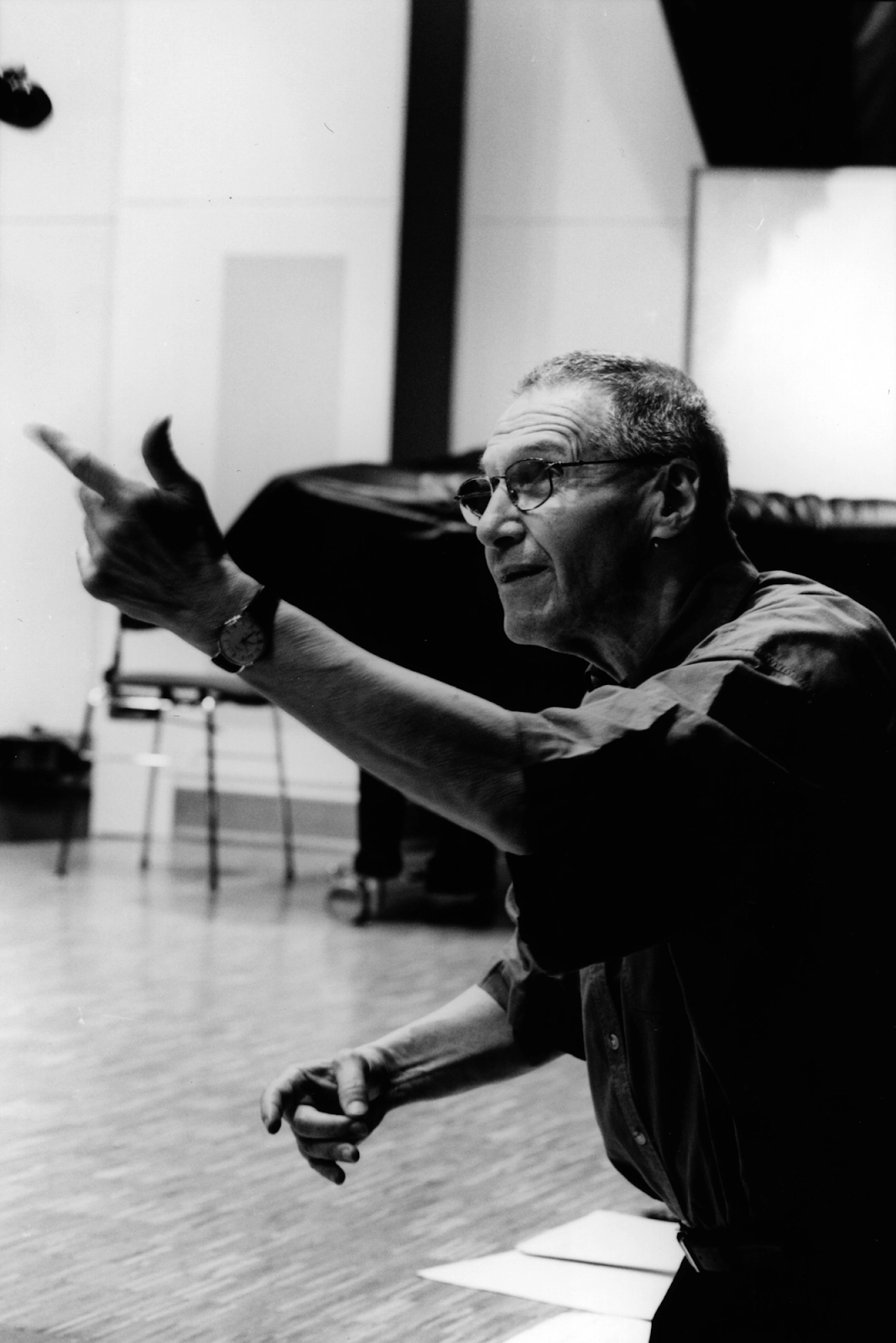
György Kurtág
Photo by Christoph Egger


György Kurtág (b. 1926) came of age during a time of political unrest in eastern Europe. Born in Romania to Hungarian parents, Kurtág spent much of his early life as a pianist and studying the limited number of scores available under Soviet rule. His earliest compositions aesthetically align with the works of Béla Bartók, Anton Webern, and Igor Stravinsky, though his style shifted drastically after living in Paris in 1957-58 and taking composition lessons with Olivier Messiaen, Darius Milhaud, and Max Deutsch. During this time, Kurtág experienced severe bouts of depression, compelling him to seek the guidance of art psychologist Marianne Stein, whom he cites as being the most influential figure of his time in Paris. Stein encouraged the composer to reimagine his work in smaller units, such as connections between individual notes, a limitation that reoriented his practice and characterized his later works. 

Kurtág collected fragments of Kafka’s diary and personal correspondences, building a relationship with the author that was both intimate and imaginary. Kurtág does not attempt to channel Kafka in the work, but reorders Kafka’s language rendering a new text entirely. There is no singular and linear narrative, no overly developed theme or motif, but rather sets of juxtaposing moods and textures that take hold of the listener without revealing the next locale. Demanding maximum emotionality and expressivity of the performers, Kurtág work embodies Kafka’s personal vacillations between extremes as well as the volatility of the sociopolitical landscape the writer and composer shared. With folk tunes styled with minimalist aesthetics, Kafka Fragments evokes a distant historical place that swirls within the vortex of modernity, thereby evoking feelings of displacement, disorientation, and transience. 

Franz Kafka c. 1910
Hulta Archive/Getty Images


Susan Narucki, soprano

American soprano Susan Narucki has forged a unique path; her commitment to the music of our time has led to award-winning recordings, performances with musicians of the first rank and close collaborations with generations of composers.  For over a decade, she has also been deeply engaged in commissioning, producing and performing chamber operas that illuminate critical issues in society, including the critically acclaimed Cuatro Corridos (2013), a bi-national collaboration addressing trafficking of women across the U.S. Mexican border.  Performed throughout the United States and Mexico, the opera received major philanthropic support from the MAP Fund /Doris Duke Charitable Foundation, UC MEXUS, Creative Capital Foundation, New Music USA and NEA Artworks.  Ms. Narucki's most recent recording, The Edge of Silence: Vocal Chamber Music of György Kurtág (AVIE Records) was nominated for a 2019 Grammy for Best Classical Vocal Recording. The recording was included in the New York Times Best Classical Tracks of 2019 and was named a Critic’s Choice of Opera News. 


A dedicated mentor to the next generation of singers, Ms. Narucki's recent residencies include the Shanghai Conservatory, Longy School of Music and Oberlin Conservatory.  She serves as Distinguished Professor of Music at the University of California, San Diego.  


For more information about Ms. Narucki, visit her website.  


Curtis Macomber, violin    

The playing of violinist Curtis Macomber was praised recently by The New York Times for its “thrilling virtuosity” and by Strad Magazine for its “panache". He enjoys a varied and distinguished career as soloist, chamber musician, and teacher, and he has for several decades been recognized as one of this country’s foremost interpreters and proponents of contemporary music. Mr. Macomber's extensive discography includes the complete Brahms and Grieg Sonatas; violin concertos by Martin Boykan and Laura Schwendinger; and hundreds of critically praised recordings of contemporary solo and chamber works.His CD of Roger Sessions Solo Sonata was acclaimed by American Record Guide as “one of the best recordings of 20th-Century solo violin music ever made.”   


Mr. Macomber is a founding member of the Apollo Piano Trio and a member of the Da Capo Chamber Players and the Manhattan String Quartet. Past memberships have included the Walden Chamber Players and the New York Chamber Soloists. He was for many years the violinist of Speculum Musicae and has also appeared with the New York New Music Ensemble, Group for Contemporary Music, and in chamber music series across the country and in Europe.  


Saturday, March 2, 2024

the golden ass: an opera in one act by Tiffany Skidmore and Patrick Gallagher

The Center for 21st Century Music is thrilled to sponsor the golden ass, a chamber opera in one act by composer Tiffany Skidmore and librettist Patrick Gallagher. The performances will take place Wednesday, March 13 and Thursday, March 14 at 7:30pm in Slee Hall. Skidmore currently serves as visiting Birge-Cary Chair in Music Composition for the University at Buffalo music department. Her compositions, including works for chamber, choral, and orchestral ensembles, are interpreted by preeminent new music collaborators, such as saxophonist Kyle Hutchins, who performed Skidmore’s saxophone opera, The William Blake Cycle: Unseen, Unbodièd, Unknown, and soprano Nina Dante, for whom Skidmore composed the role of Psyche (Read more about The William Blake Cycle here). In addition to her work at UB, Skidmore acts as Executive Director and Co-Artistic Director to the 113 Composer’s Collaborative, an organization dedicated to producing concerts, festivals, and guest artist residencies on a global scale. Drawn to the mystic and arcane, Skidmore finds inspiration in literature, poetry, and contested historical figures, such as writer Anne Sexton and composer Hildegard von Bingen.


"The Myth of Psyche and Cupid," overture to the golden ass
Kyle Hutchins, baritone saxophone
Cecilia and Martin Gelland of Duo Gelland, violins

A retelling of Roman poet Apuleius’ Cupid and Psyche myth, Patrick Gallagher’s libretto presents a dual conflict: Psyche perceived as a potential usurper to Venus, and both women individually resisting against societal pressures rooted in gendered expectations. Written for a limited orchestra, the opera boasts a dynamic sonic pallet cultivated through extended instrumental techniques and poignant vocal lines. As a trained singer, Skidmore is intimately familiar with the voice’s vast expressive capacity. The golden ass permits an exploration of vocal timbres and paralinguistic utterances, thereby resulting in nuanced delivery of the plot not tied to explicit language.  

Skidmore and Gallagher’s collaboration presents themes centering trauma, intergenerational relationships, and agency, weaving a narrative that emerges from within the music itself rather than from the text. In an interview with the American Composer Forum, Skidmore states that the work’s universal themes are unfurl “through simple movements, vocalizations, visual projections, and recorded sounds.” Though an abstraction of Apuleis’ original, the golden ass offers a compelling portrait of woman embroiled in a battle against forces greater than themselves and living with the consequences of their actions through music that is neither straightforward nor literal, but acutely self-aware. In emphasizing the work's immanent symbolism, Skidmore encourages the audience to engage with the opera and the complexities of myth it depicts through a new orientation.


"Grow Old" from the golden ass
Justin Anthony Spenner, baritone


In conversation about the upcoming performance, Skidmore expressed excitement about staging the work at UB, mentioning that this is the first time the golden ass will incorporate a live instrumental ensemble, including members of the Slee Sinfonietta, and will capitalize on the acoustics experience offered by Slee Hall.


The performance will feature UB assistant professor of voice, Tiffany DuMouchelle as Venus, visiting artists Nina Dante as Psyche, Adam Zahller as Cupid, Justin Anthony Spenner as Father, and choir comprised of UB students. 

Friday, December 1, 2023

Events in the week following Thanksgiving- #2 Composer Pablo Chin Lecture and Fonema Consort Residency at University at Buffalo - Recording Session and Concert

Yesterday was an exciting for UB composition students, as the remarkable Fonema Consort rehearsed and recorded five new works composed by our graduate students for this opportunity. Fonema’s residency, sponsored by the Center for 21st Century Music, concludes today with a much-anticipated program of works by Pablo Chin, Graciela Paraskevaídis, and Julio Estrada, our distinguished guest whose masterclass and lecture on Wednesday provided a great deal of inspiration. Fonema’s artistic director and co-founder, Pablo Chin, also offers a lecture on his own music, as well as on the music of Julio Estrada, today from 3 to 4 pm in Baird Recital Hall (250 Baird). Tonight’s concert begins at 7:30 pm in Lippes Concert Hall (Slee Hall).


Described by the Chicago Reader’s Peter Margasak as “dazzling“, Fonema Consort’s debut album Pasos en otra calle (New Focus Recordings, 2014) features the music of Costa Rican composers Pablo Chin and Mauricio Pauly. Fonema’s 2017 album FIFTH TABLEAU (Parlour Tapes+) was supported by an Aaron Copland Fund for Music grant and featured new works by five rising American composers. The ensemble looks forward to the release of their third album, Vistas furtivas: the music of Juan Campoverde (New Focus Recordings), in February 2020. They have been broadcasted by WFMT and CAN-TV.


Fonema Consort is a recipient of a FACE grant (2013), an Aaron Copland Fund for Music grant (2016), two Ernst von Siemens Music Foundation grants (2016 and 2017), and two Amphion Foundation grants (2018 and 2019). They have received significant project support from the Goethe Insitut of Chicago. The ensemble is grateful to the City of Chicago’s DCASE, the Amphion Foundation, the Goethe Institut, and the Mexican Cultural Institute for supporting their 2019-2020 season.

Pablo Chin, whose recent music often draws inspiration from the narratives of film and literature, phonetic structures in text, and the use of idiosyncratic transcription methods that enable imaginative exploration of pre-existent musical sources. His dissertation focused on the work of Mexican composer Julio Estrada.


This week marks the first visit by the Fonema Consort to the Center and to Buffalo. We very much hope to see them back at UB in the near future!


Fonema Consort's Program

Mictlán by Julio Estrada

Yuunohui'sa'ehecatl'nahui by Julio Estrada


Sin ir más lejos by Graciela Paraskevaís


AquAria by Pablo Chin


Concert Information: 

🗓 Friday, December 1, 2023 

⏰ 7:30 PM

📍Lippes Concert Hall (North Campus)

💰$10 or free with valid UB card