Showing posts with label Matt Sargent. Show all posts

Tuesday, March 1, 2022

Matt Sargent

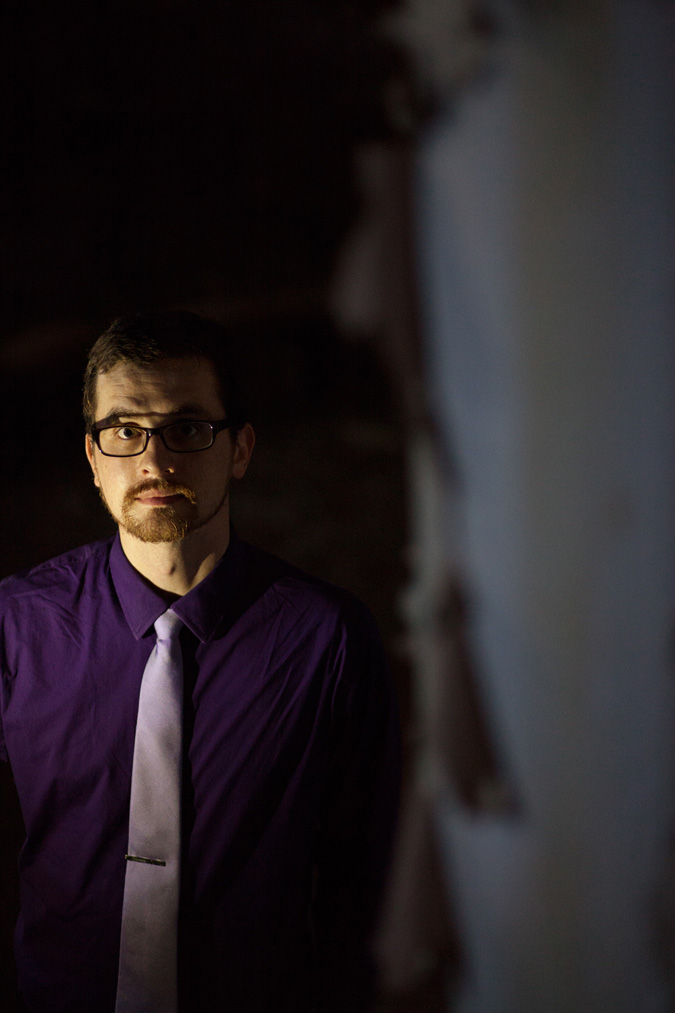
The Center for 21st Century Music is excited to welcome Matt Sargent (website) to campus for a masterclass followed by a lecture on his compositions.

Matt Sargent (b. 1984) is a composer, guitarist, and music technologist based in upstate New York. His work grows from interests in resonance, computer models of intelligence, and the making/breaking of long-form patterns.

His compositions have been described as “bringing a sharpened sense of the transcendental into the 21st century.” (Paul Muller, Sequenza21) On his 2018 album, Ghost Music, Bill Meyer writes, “this music isn’t about following in anyone’s footsteps; it uses bare resources to establish a bounded and essential place.” (The Wire Magazine)

His albums include Tide (A Wave Press), Separation Songs (Cold Blue Music), Tide (for ten basses) (Marginal Frequency), and Ghost Music (Weighter Recordings).

In demand as an audio engineer and technical producer for contemporary music, Matt recently recorded Alvin Lucier’s Ricochet Lady (Black Truffle), Sarah Hennies’s Spectral Malsconcities (New World Records), Ensemble Signal / David Felder’s Les Quatre Temps Cardinaux (Coviello Contemporary), and Paul Catanese’s Century of Progress / Sleep, among others. He developed networked scoring software for Alvin Lucier and the Swiss-based Ever Present Orchestra, which facilitates performance of numerous large ensemble works composed by Alvin Lucier. In 2021, he co-composed A Murmur in the Trees, for twenty-four basses, with Eve Beglarian and bassist Robert Black. Praising his work on Robert Carl’s album, Splectra (Cold Blue Music), Fanfare Magazine writes, “he could find no better collaborator than composer and sound designer Matt Sargent.”

Matt is a visiting assistant professor of music at Bard College.


Wednesday, February 17, 2016

Awards, Commissions, Performances: Recent Composer Activities


The fall is a busy time for UB graduate composers, and several have had very eventful semesters.  The past few months have seen many of them composing new works, receiving commissions, and having works performed by top-tier performers around the world.  Here is just a quick sample of what some of the group are up to:

Weijun Chen
Weijun Chen was awarded the prestigious Jacob Druckman Prize by the Aspen Music Festival and School.  The award, offered "in memory of the great American composer who taught at Aspen from 1976 to 1995," is conferred on one student composer each season.  The prize consists of a commission for a new orchestral piece for the Aspen Philharmonic Orchestra, which will be premiered this summer.  In addition, Weijun has been commissioned by MATA to compose a new work which will be premiered at the 2016 MATA Festival. Finally, Weijun's string-quartet, Canoe, saw three performances in the past months by the Mivos Quartet, and received an honorable mention at the American Prize for Composition.  Congratulations Weijun!


Moshe Shulman
Also, recent UB graduate Moshe Shulman has won the 2015 Fromm Foundation Commission Competition.  Moshe is hard at work on the piece—a chamber work for singer and small ensemble with an original Hebrew text about Jewish prophetesses.  We look forward to hearing about this project as it develops, and we can't wait for the premiere!

Jessie Downs' music was featured on a concert in Chicago late last month, alongside works by Doug Farrand and Ryan Packard.  Streetlights, a string trio originally composed for young musicians was performed, in addition to I did not see it to the end for piano, percussion, and electronics (see below for a recording).  The latter work is a companion piece to work-in-progress, which Jessie is composing for Packard, Farrand, and UB pianist Jade Conlee), we'll look forward to hearing that piece soon.  Also, Jessie's vocal sextet, castings of light, which was performed by Voxnova Italia at their December residency at the Center, will see a performance in downtown Buffalo later this Spring.


Matt Sargent has been keeping very busy, with several commissions in the works, including a trumpet concerto for Jeff Silberschlag and the Chesapeake Orchestra, a piece for tuned gongs and real-time electronics commissioned by percussionist Julie Licata at SUNY Oneonta, and Pillars of Decay, a "multimedia collaborative performance for custom-designed metal/industrial instruments and real-time electronics," designed by Matt, vocalist Amanda Schoofs, percussionist Trevor Saint, and UB-alum Jeff Herriott.  The work will be toured across the Rust Belt next year.  In addition, Matt's Ghost Music, was recorded for a forthcoming album of solo percussion works by Bill Solomon of Signal.  Matt also recently completed two series of works:  More Snow to Fall, seven pieces for glockenspiel and vibraphone for Saint, who will premiere the works on his March 2016 tour, and Tide, three new works for 10 violins, 10 cellos, and 10 basses (i.e., multi-tracked soloist).  The latter saw two recent performances by UB-alum TJ Borden in California (see below for a recording).  Finally, Matt has been presenting a series of concerts with the Electroacoustic Ensemble at Bard College (where he serves as Visiting Professor of Electronic Music and Sound), including two performances with composer Michael Pisaro, who was in residence with the ensemble in November 2015.


Last month, Roberto Azaretto was in Madeira, Portugal, where he took part in the Estalagem da Ponta do Sol Residency for Contemporary Music and Electronics.  While there, he worked with composers Patricia Alessandrini and Gilbert Nouno,  and had an in-progress work performed by violinist Karin Hellkvist and flutist Richard Craig.

Ethan Hayden
Ethan Hayden's piece for stereo electronics, bats with baby faces in the violet light, saw two performances in the Fall:  at Ljudbio II in Uppsala, Sweden, and also at an electroacoustic music concert at Buff State.  In addition, Ethan's presented "…ce dangereux supplément…", his piece for solo voice, electronics, and animated projections, at the 2015 International Computer Music Conference in Denton, TX.  He'll perform the same work this spring at Narrations contemporaines, a poetics conference in Montreal hosted by bleuOrange, revue de littérature hypermédiatique.  Ethan's large ensemble piece, Let's celebrate our corpse-strewn future! will be premiered by Buffalo's Wooden Cities next month, at a concert which will also feature works by current/former UB composers Zane Merritt and John Bacon.  In addition, his four-voice arrangement of Kurt Schwitters' Ribble Bobble Pimlico was heard last weekend at Hallwalls' Dada centenary event, performed by BuffFluxus.

That's just the tip of the iceberg, there is lots of other music being made here at UB, and we can't wait to hear what's next for these artists in the coming months!

Wednesday, June 24, 2015

Null Point: Singing Silos, Decay/Reverberate


Silo City, site of Null Point's Decay/Reverberate
The grain silos in Buffalo's Old First Ward have been an attractive location for the city's experimental artists for many years.  These vast, now empty structures are the site of several well-known events, including the Silo City Reading Series, the City of Night festival, and the Silo Sessions video series.  Most of these events take advantage of the resonant acoustics of the large grain elevators, using the silos' natural reverberation to extend and transform a wide variety of sonic art forms, from folk music to literary readings.

Last week's Decay/Reverberate, however, took a different approach.  Sponsored by the Robert and Carol Morris Center for 21st Century Music's co-sponsorship program, and presented by Null Point, a Buffalo-based platform for experimental music and sound art, the four-day event (June 11-14) centered around site-specific works that recognized not only the silos' acoustic features, but also their architecture and history—a history that is entangled with often-troubling subjects like habitat destruction and labor exploitation.  Event curator (and UB composer) Colin Tucker sought out works that "build new musical and sonic syntaxes from the ground up in dialogue with the site, revealing Silo City in new and unexpected ways."  Null Point's call for works attracted a surprising number of artists—with submissions coming from 18 countries on 5 continents—all eager to engage with the site in this way.

Tucker developed a curatorial strategy he called 'double negation':  "[The] site and aesthetic negate each other, creating a third space which is not reducible to either, and yet which opens up unnoticed aspects of both.  The site provides resistance to aesthetic business-as-usual, while the artwork brings into focus aspects of the site that might not be apparent in its everyday existence."  This resulted in a program of works that were site-specific not only in their dependence on the physical and acoustic properties of the silos, but also in their reckoning with and consideration of their social and ecological history.

Materials from Christof Migone's Record Release 7-inch
which uses surface-resonating speakers, contact microphones, 
and small pellets used to make vinyl records in an interactive 
installation.
For some artists, this entailed turning the silos themselves into a kind of large-scale musical instrument.  One such work was Lena Nietfeld's "…some workers it casts into barbarous types of labor, and others it turns into machines", in which "the floor, walls, and the remains of metal grain hoppers are scraped and struck with a variety of objects of historical significance."  These include shovels and brooms (used to move loose grain from ship hulls to the grain elevator) and beer bottles (representing the grain scoopers' dependence on saloon bosses).  In Nietfeld's work, five musicians perform a repertoire of actions that reflect the kinds of work done when the grain elevators were fully operational.  "In some cases this can be very visceral," Nietfeld explains, "but in other cases it is more subtle."  Noting that the introduction of grain elevators to the waterfront produced a significant change in the First Ward's soundscape, the performers of "…some workers" do not read from a traditional score, but instead rely on cues from each other and/or unpredictable environmental sounds (bird calls, ships, machines, etc.).

For the collaborative work, Slow Drip, media artists Tom Stoll and Ezra Teboul took the simple sound of dripping water—ubiquitous to abandoned industrial sites—and developed it into an expansive sonic sculpture.  Based around a set of hanging bowls which slowly drip water into each other—mimicking the funnel structures of grain silos—the piece used opto-interrupter sensors to measure the dripping, and relayed this information to a computer, which spontaneously created real-time sonic responses from a repertoire of drop-like sounds pre-recorded by clarinetist, Krista Martynes.

Shannon Werle, a Dartmouth-based artist specializing in the intersections between architecture, sound, and urban research, offered Filter Index.  A culmination of months of research into the relationship between impulse-location and tone-color, the piece consisted of several dozen balloons positioned throughout the silos popping in succession.  This activated "the reverberant interior of the Marine A elevator, making manifest the unique acoustic architecture of the silo."  Werle has created a preliminary fixed media version of this piece—with an accompanying video diagramming each point's location—which can be seen below (additional documentation from Decay/Reverberate will be released on Null Point's website over the coming months).


Other pieces included works by frequent Center collaborators Daniel Bassin and Matt Sargent.  Bassin performed his Typographies II:  Opera, a series of 35 improvisational modules for trumpet (Bassin) and drum set (UB percussionist John Bacon).  The piece—based on a compositional germ Bassin first cultivated in a string quartet composed for the Ardittis at June in Buffalo 2010—utilized the silos' reverberations as a "virutal third player" and was subtitled "sempre pianissimo":  referring to the 'intensity of listening' demanded by the piece as well as the "potential violence that comes as soft sounds give way to silences."  Sargent's Tide (10+1 basses) was a collaboration with bassist Zachary Rowden.  The work's eleven lines (10 recorded + live performer) consisted of an interaction between software and improvisor, just as its realization depended on an interaction between sound, space, and audience.

Daniel Bassin & John Bacon
perform Typographies II: Opera
Nearly all of the nearly twenty pieces featured at Decay/Reverberate were world premieres, composed especially for this site and this event.  One of the few exceptions was a performance of James Tenney's classic having never written a note for percussion, a frequently-performed open work for percussion, consisting simply of a crescendo from pianissississimo to fortissississimo and back again.  During last week's realization, percussionist Brandon Bell performed the work as an extended roll on a simple gong.  "However," Tucker notes, "the real instrument was not the gong but the silo itself—as the gong's volume rises, the silo begins to 'sing' as its resonant frequencies become activated."

The singing of the silos was a integral—if not deliberately understated—component of Tucker's own work, surplus, an electroacoustic installation whose specific location was unannounced.  In surplus, two unmarked speakers played back a large number of field recordings taken at Silo City, which had been overdubbed and filtered in order to reinforce low frequency broadband noise emanating from nearby industrial fans and distant traffic.  As a result, the sonic environment near the concealed speakers became something of an acoustic black hole, as the speakers strongly emphasized certain ambient sounds while masking others.  "[I] liked the idea of just strolling around the site and [wondering] 'What's that going on over there?" Tucker told WBFOsurplus aligns closely with Tucker's original curatorial project, as the piece, in his words, "materializes a socio-ecological contradiction in sound, denaturing the site's present day scene with faint traces of the unresolved antagonisms constitutive of its past."


—Ethan Hayden

Thursday, January 29, 2015

Performances, Commissions, Residencies: A busy Fall for UB Composers


Our composers have been up to really extraordinary things, and the Fall semester saw many of them composing new works, receiving commissions, and having works performed by some of the most skilled performers in the field.  Neither snow, nor rain, nor lake-effect thundersnow stays these composers from constantly creating new and exciting work!  Here is just a sample of what some of the group are up to:

Nathan Heidelberger has been hard at work on his dissertation, an extended single-movement work for string quartet.  The first two sections of the piece were read and recorded last Fall during the Mivos Quartet's residency at the Center, and he was enthusiastic about the results.  In addition, Nathan and pianist Daniel Walden were recently granted a Special Award from the Yvar Mikhashoff Trust for New Music (named for the virtuoso pianist who was a professor of music at UB from 1973-1993).  Nathan describes their next project:  "The grant will help support an upcoming collaborative project:  a recital-length program that will combine a new multi-movement piano solo of mine with a complete performance of the Luigi Rossi manuscript, a collection of bizarre 16th-century Italian harpsichord music that includes the only extant keyboard work by Carlo Gesualdo."  You can hear Daniel's performance of Nathan's song cycle Descriptions of the Moon, with vocalist Marine Fribourg ,below:


Robert Azaretto had two new works premiered in the Fall.  His solo piano piece, lago. paisajismo abstracto. 2., was premiered in Buenos Aires by Bruno Mesz in the gorgeous Teatro Nacional Cervantes, Argentina's national theatre.  His flute and bass clarinet duo, paisajismo abstracto. 4., was premiered at the Distat Terra festival in Choele Choel.  The latter piece was commissioned by Musica AntiquaNova for Austria's Duo Soufflé.

Matt Sargent
Matt Sargent has had a very busy Fall semester.  He collaborated on a duo concert of electroacoustic music with turntablist Dani Dobkin, which was presented at the Hartford Art School in November.  Then in December, the Ghost Ensemble performed his work Tide for nine "sliding instruments."  The Undue Percussion Duo (featuring percussionists Nick Fox and Trevor Saint) included Matt's stunning small stones in a program they played on six-city Midwestern tour in October.  Saint is a frequent collaborator of Matt's, and will be performing a new work of his for solo glockenspiel in March.  Matt will see another premiere in March:  he was commissioned to write More Snow to Fall, a work for two electric guitars and 'cello, which will be premiered at the Museum of Contemporary Art in Cleveland.

Colin Tucker has received several commissions, and is no doubt hard at work composing new works.  Richard Haynes, clarinetist of ELISION, Weston Olencki, trombonist of Wild Rumpus/Fonema Consort, and Aaron Hynds, a tubist at Bowling Green State University all commissioned new solo works from Colin.  He also had several works performed in the Fall.  His solo saxophone work futures unmade in the boundlessness of the instant was performed at the University of Malaya in Kuala Lumpur by Joshua Hyde, and was taken on a tour of Ohio universities by the New York-based saxophonist, Geoff Landmann.  In addition, his sound installation, voice dross, was commissioned by the Echo Art Fair, where it was installed in September.

Chun Ting Pang's Pulsating Garden—a commission by Hong Kong Composers' Guild—was premiered during the guild's annual new music festival, Musicarama, by Korea's Ensemble Eclat.  In addition, his Vocalize the Voicelessness for trombone, percussion, 'cello, and piano will have its German premiere in March by Ensemble Ascolta.  Chun Ting also became the composer-in-residence of the Hong Kong-based Zheng Quartet, ZhengMusic (the zheng is a Chinese zither).  A new commission for the quartet will be performed during this season.

Zane Merritt
photo by Megan Metté
Zane Merritt had two new works premiered in the Fall:  his chamber ensemble piece Sex-Bot (serial no. 5347) becomes self-aware and falls in love with an Allen wrench was premiered by Wooden Cities in October (read more about that performance here), and his orchestral work Dramatic Individuals was premiered by the Dubuque Symphony Orchestra in November.  This weekend, he and UB 'cello professor Jonathan Golove will premiere his Mercury Aqua Mirage for theremin 'cello and electric guitar at the SUNY New Music and Culture Symposium.  At the same event he will perform solo guitar works by fellow UB composers Nathan Heidelberger, Colin Tucker, and Meredith Gilna, and will premiere a new work by Megan Grace Beugger.  Megan will have two pieces played at this symposium:  in addition to her new guitar piece, her percussion duo Daring Doris will also be performed.  Megan is also gearing up for this year's MATA Festival in New York, which will see a performance of her piece for piano-dancer, Liason.

Several composers attended festivals and conferences in the Fall.  Su Lee was one of of eight composers selected to attend the Goethe-Institut Boston's December symposium.  There, she took part in composition workshops with composers Raphaël Cendo and Isabel Mundry.  Su was also commissioned to write a new piece for the New York-based ensemble mise-en, which the group will premiere during their 2015/16 season.  Weijun Chen's work In Search of a Shore was heard at the Composition in Asia Festival in Tampa, and he is planning on presenting other pieces at several conferences in the Spring, including the RED NOTE New Music Festival Composition Workshop (Normal, IL), the Mise-En Music Festival (New York, NY), and the Grawemeyer Award for Music Composition 30th Anniversary Conference (Louisville, KY), where his string quartet, Canoe, will be performed by TALEA Ensemble.  Just this week, Weijun has been named a composition fellow at this summer's Aspen Festival.

Esin Gündüz recently revised a piece she composed for the Meridian Arts Ensemble (during their Fall 2011 residency at the Center) for performance by the Cleveland-based Factory Seconds Trio.  The revised work will be premiered at Baldwin Wallce Conservatory this spring.  She is also hard at work on a commissioned work for violists Yuri Gandelsman and Tuba Ozkan, which will be performed in September at Turkey's Mersin State Conservatory.  As the composer-in-residence at Buffalo's Friends of Vienna, Esin is writing another trio which will see an October premiere.  Also active with the Buffalo-based ResAUnance, Esin (a skilled vocalist) recently made a debut recording of folksong arrangements and original works with the improvisatory ensemble, which should be mixed and mastered by mid-semester.

Ethan Hayden had several works performed in the Fall, including his percussion quintet Clicks & Beeps, which was performed by the Concert Percussion Ensemble at Florida Atlantic University, and his four-voice arrangement of Kurt Schwitter's Ribble Bobble Pimlico, which was performed by ThingNY at two concerts in November.  He performed his (tRas) for solo voice and electronics at the INTIME symposium in Coventry, UK in October.  Ethan is also the artist-in-residence this year at the Electronic Poetry Center's annual Digital Poetry & Dance concert, at which he'll be premiering a suite of new pieces for voice, video, and electronic sounds called "…ce dangereux supplément…".

Matthew Chamberlain spent his Fall finishing a string trio commissioned by Ensemble Chartreuse, as well as a guitar solo that will soon be premiered by Zane Merritt.  Matthew is also the director of UB's Contemporary Music Ensemble, and is often hard at work preparing new works for performance with that group.

Clinton Haycraft
Several composers have been collaborating with choreographer Melanie Aceto, from UB's Department of Theatre and Dance.  Clinton Haycraft's work, Advocate, for violins, was choreographed by Aceto, and has already seen three performances throughout the Western New York area.  Jiryus Ballan collaborated with Aceto and UB percussionist Alexander Chimienti on a series of works.  After joining Aceto's modern dance class as an accompanist (Jiryus is an accomplished Buzuq player), he and Chimienti began an ongoing collaboration that began with live improvisation and eventually coalesced into 25 tracks of recorded compositions.  For Jiryus, a key part of the project was the intercultural exchange.  "I think the most important thing was the combination of different musical elements from diverse cultures.  For example, I used quarter tones in some of the tracks and employed the Maqam [a system of melodic modes used in traditional Arabic music]."  He compares this kind of compositional process to the manner in which traditional folk music is created.  "In my culture (Palestinian), the folk music was created by the people.  They repeated melodies and they remembered them by heart and with time these melodies attained their own unique characteristics."  An excerpt of some of these collaborations can be heard below:


With all this activity just last semester, we can't wait to see what's next for these composers in the coming months!


—Ethan Hayden

Thursday, September 18, 2014

UB Composers have been up to Great Things!


Summer is often a very exciting and active time for composers, and that's especially true for those here at UB.  This past summer saw many of our composers having works performed, and participating in conferences, festivals, and seminars in the US and abroad.

Colin Tucker
Colin Tucker had a particularly busy summer.  While attending the Darmstadt International Summer Courses for New Music, he presented a lecture recital with renowned Australian saxophonist Joshua Hyde.  The lecture dealt with issues of notation, interpretation, and performance practice in the solo pieces that Colin wrote for him (including futures unmade in the boundlessness of the instant).  In May, Colin had his newest piece, not this (2014) for bass flute, bass clarinet, saxophone, piano, percussion, mezzo-soprano, and strings premiered by the French ensemble, soundinitiative, in Paris.  Finally, his chamber piece, engulfed, constrained in a widening gap (2013), which was premiered at last year's June in Buffalo festival, saw three performances this summer, including two by the East Coast Contemporary Ensemble.

Su Lee also traveled to Europe, as her Melting Crystal for flute, clarinet, violin, viola, and 'cello was a winner of the Kazimierz Serocki International Composers’ Competition in Warsaw, Poland.  In addition, her exciting large ensemble piece, Soundless Cry, was performed at the Mise-en Music Festival in New York. 


Chun-ting Pang was also at this festival, which saw the US premiere of his Vocalize the Voicelessness for trombone, percussion 'cello, and piano.  On the festival’s last day, Chun-ting flew to Finland to attend Sävellyspaja 2014, an annual composition masterclass in Porvoo. While in Finland, he studied with Jukka Tiensuu, Jouni Kaipainen, and Tomi Räisänen, and heard the Avanti! Chamber Orchestra perform his piece, The Flowers Appear on Earth. Later, Chun-ting was privileged to be one of the fellows at the Composers Conference at Wellesley College, a course led by Mario Davidovsky, Steve Mackey, and Augusta Read Thomas.  At Wellesley, Chun-ting revised Vocalize the Voicelessness, which had a successful performance at the conference’s final concert. 


For the past year, Nathan Heidelberger has had the honor of being the first ever composer-in-residence for Oerknal!, a new music collective based in The Hague. The culmination of this partnership took place in June, a portrait concert of Nathan’s music called Lunatics!, featuring his pieces, My Hands Are Empty (which was premiered by the Slee Sinfonietta in April 2012), Descriptions of the Moon (his epic song cycle for soprano and piano), and Breather, a brand new sextet composed for Oerknal!. You can hear some live audio from the performance here.  “It was deeply rewarding to work closely with such a phenomenal great of young performers,” Nathan said, “and I'm looking forward to future collaborations with them.  I was grateful to received support from The Center to help cover my travel expenses.”

Juan Colón-Hernández traveled to Valdeblore, France for the Zodiac Festival, where his trio for clarinet, 'cello, and piano, Sobre el camino y otras cosas, was performed.  While there, he took master classes with composer Andrew List.  Later, Juan's string quartet, A Discontinuous Flux, was awarded third prize at the Malta International Music Competition where he participated in master classes with composer/performer John M. Kennedy.  Finally, Juan's solo guitar piece, Tropos, was selected as part of the 12th Annual Festival of Contemporary Music in San Francisco.

Weijun Chen
Weijun Chen's Canoe for string quartet was premiered by the Freya Quartet at the Charlotte New Music Festival.  Inspired by the poem 'I Am a Canoe' by the Misty Poet, Cheng Gu, Canoe won 2nd prize in the University of Louisville's Frank Robert Abell Young Composer Competition for New Chamber Music.  The reviewer, Perry Tannenbaum, said of Weijun's piece, "Strands of melody broke loose from the quartet harmonies as the score replicated the drift, the loneliness, the longing, the emotion, and the despair of the poem. Toward the end, there were ethereal passages that jumped beyond the template of the poetry and showed that Chen, unlike many of his contemporaries, is unafraid of lingering in intense expression."  Weijun's music was also celebrated when his wind ensemble piece, Distance, won the Hat City Music Theater's American Prize.


Wooden Cities prepares to perform in Cleveland, OH
Other UB composers packed up and took their works on the road.  Buffalo's up-and-coming new music collective, Wooden Cities—which features a number of UB composers among its members—played a five-city DIY tour across the Rust Belt that included performances in university concert halls, experimental theaters, indy bookstores, and even a dive bar. In addition to performing works by Berio, Eastman, Ives, and Zorn, the ensemble's performances were bursting with new music from UB composers, including Ethan Hayden's (tRas), Nathan Heidelberger's Occasionally, music, Zane Merritt's The Reputation, and Matt Sargent's Tide, in addition to UB faculty composer Jeffrey Stadelman's Koral 8.

Megan Beugger
Several other UB composers had eventful summers.  Matt Sargent's large-scale glockenspiel solo, Saint, was premiered by its namesake, percussionist Trevor Saint at the University of Wisconsin, Milwaukee.  Matt also began an appointment as visiting lecturer in composition and electronic music at the Hartt School of Music.  Megan Grace Beugger spent the summer working on a new piece for her dissertation, as well as editing her Liason for piano-dancer, which was performed by Melanie Aceto at Hallwalls in late July (many of you will remember this intriguing piece from June in Buffalo 2013).  In addition to a performance of his bats with baby faces in the violet light at the New York City Electroacoustic Music Festival and performances with Wooden Cities, Ethan Hayden saw the publication of his book on Sigur Rós's ( ) by Bloomsbury's 33 1/3 series.

All in all, a remarkably busy summer for our composers!  We can't wait to see what's next for them this year!


—Ethan Hayden

Tuesday, February 19, 2013

Ensemble Court-Circuit visits the Center in March!


We at the Center for 21st Century Music are looking forward to a visit from acclaimed French contemporary music group Ensemble Court-Circuit next month, on Tuesday, March 19th, and Wednesday, March 20th, when they will visit us to present a concert of works by contemporary composers, as well as offer a master class to UB graduate composers where they will workshop and record their compositions. 

Ensemble Court-Circuit
Ensemble Court-Circuit was originally founded by Philippe Hurel and Pierre-André Valade in 1991, following an encounter with Barbara and Luigi Polla, one of the founders of the Analix Galery in Geneva, Switzerland.

They have been invited to give concerts at major international festivals and musical institutions around the globe, including IRCAM, Opéra, Radio-France and Cité de la Musique (Paris), Musica (Strasbourg), Aix en Provence Festival, 38e Rugissants (Grenoble), Manca (Nice), GMEM (Marseille), Whynote (Dijon), Warsaw Autumn, Ultrashall and Maerzmuzik (Berlin), Ultima (Oslo), Traiettorie (Parma), Roma Europa, Music Factory (Bergen), Gaïda (Vilnius), NYYD (Tallin), Alicante, Wien Modern, Darmstadt, and MNM (Montréal).

Ensemble Court-Circuit has also been involved in many interdisciplinary projects, including several Paris Opera ballet premieres (Le Songe de Médée, A. Preljocaj/M. Lanza - Le Souffle du temps, A. Lagraa/G. Grisey), and several ciné-concert performances (Paris qui dort, R. Clair/Y. Maresz and Metropolis, F. Lang/M. Matal). In 2011-2012, Court-Circuit began a collaboration with the Bouffes du Nord Theater (Paris) in order to perform a series of chamber operas, most recently The second woman, with music by F. Verrières and stage direction by Guillaume Vincent, inspired by the film Opening Night by John Cassavetes.

Court-Circuit also has an extensive discography, and has recorded works by Tristan Murail, Philippe Leroux, Thierry Blondeau, Gérard Grisey, Daniel D'Adamo, Philippe Hurel, Joshua Fineberg, Roger Reynolds, and Jean-Luc Hervé.

Our workshops with visiting ensembles are often a great way for composers to work on and perfect long-term projects, as UB graduate composer Matt Sargent is doing, “Court-Circuit is reading several fragments of a forthcoming work for a quartet of flute, cello, piano, and percussion. The piece will be presented in full at this year's June in Buffalo festival, and is being composed as a commission for the Vigil Ensemble (which includes Ensemble Signal members Bill Solomon, percussion and Kelli Kathman, flute), who will perform it in Fall of 2013.

“This music is a bit of a departure from my standard compositional methods, and in this way, my submission for Court-Circuit is a short series of etudes to expand the resources of my compositional toolbox in approaching the piece as a whole. I am extremely grateful for the opportunity to workshop these ideas with such an outstanding ensemble: such engagement in the middle stages of a compositional process is a very rare gift and I am quite excited to hear out and incorporate the results of these exploratory etudes into the larger piece, which will be revealed in June.”

On the other hand, graduate composer Clint Haycraft will hear his piece for the first time at the workshop, “With the working title of Postcard From Hell, this microtonal etude for violin, cello, and computer is a meditation on what it means when humans emulate machines. The players will be guided in various ways by in-ear monitors, and the primary goal of this experiment is to find the best method possible for making extended just intonation more quickly and easily realizable. Hopefully, the work will also shed some poetic light onto humankind's seemingly indispensible, yet lackluster relationship with the computer.”

Stay tuned for many more upcoming events this March at the Center!


Link to this post here.


Tuesday, September 4, 2012

Announcing the Fall 2012 Season at the Center!


We at The Robert and Carol Morris Center for 21st Century Music are excited to announce our Fall 2012 Season! June in Buffalo 2012 was a great success and a stimulating week of fresh new compositions and performances, as well as, in the words of the great New York Times music writer Allan Kozinn, “an intensive weeklong boot camp for budding young composers.” Allan Kozinn wrote up two great reviews of June in Buffalo 2012 in the New York Times, which you can read here and here.

UB alumn Judith Sherman
Our Fall season already began on August 25, when UB graduate composer Matt Sargent served as the music director for American Grain, a multimedia performance event for the Marine A grain elevator of Silo City, in Buffalo, NY. The event featured, amidst dance performances, an array of art on the walls, and tours throughout the silo, a cello quartet written by Matt and headed by UB faculty cellist Jonathan Golove. Read more about the event at the Buffalo News.


Our next event will be Working in Time: A Celebration of the Arts in Honor of Bruce Jackson on September 21. The event will celebrate the life and works of documentary filmmaker Bruce Jackson, who is the James Agee Professor of American Culture at the University at Buffalo. Working in Time will feature music by UB Birge-Cary Chair in music composition David Felder, and also feature projects by filmmaker Frederick Wiseman, and UB poet and documentarian Diane Christian. Working in Time will take place on Friday, September 21, 1:00-5:00 p.m., in Lippes Hall.  

Our first Slee Sinfonietta concert will be on Monday, Sep. 24, and will showcase two pieces by Alban Berg on the program: his op. 5, Four Pieces for Clarinet and Piano, and his Chamber Concerto for Violin and Piano with 13 wind instruments, featuring violinist Yuki Numata and pianist Daniel Pesca, under the baton of Robert Treviño. The program will also include Gyorgy Ligeti’s Melodien, and John Adams’ Chamber Symphony.

On Wednesday, October 10, we will be hosting composer Jake Romig from Western Illinois University for a day of composer master classes and workshops, as well as a presentation on his own music.

Our second Slee Sinfonietta concert will be on Tuesday, October 30, and will offer an exciting and dynamic program of late 20th century works, under the baton of Maestro Daniel Bassin, including: Karlheinz Stockshausen’s Kreuzspiel, Gyorgy Ligeti’s Horn Trio, Morton Feldman’s De Kooning, Tristan Murial’s Vues Aériennes, and Witold Lutoslawski’s Dance Preludes. Our concert will again include violinst Yuki Numata, alongside horn player Adam Unsworth, and UB faculty pianist and New York Philharmonic pianist-in-residence Eric Huebner.

From November 26th to 28th, violinist Curtis Macomber, from the Manhattan School of Music, will visit the Center, alongside UB alumn and two-time Grammy winner of the award for Classical Producer of the Year, Judith Sherman. For three days they will run a workshop on recording, editing, and producing Classical music.
Norrbotten Neo

On Tuesday, Dec. 4, the expert contemporary music ensemble from Sweden, and longtime friend of the Center, Norrbotten Neo, will join us for a composer workshop. The next day, on Wed., Dec. 5, they will give an evening concert. 

Spring at the Center will be even more active than the Fall. April's Slee Sinfonietta concert will feature bass singer Ethan Herschenfeld, soprano Laura Aikin, and about 30 musicians from SIGNAL Ensemble, for the premiere of David Felder’s Les Quatre Temps Cardinaux (The Four Cardinal Seasons), a commission from the Koussevitzky Foundation. Also on the program will be Felder’s Tweener, featuring UB percussionist Tom Kolor. Spring will also include visits from composer Phillipe Hurel, French ensemble Court-Circuit, and Oberlin composer Josh Levine.

New York City’s Talea Ensemble, who were originally scheduled to come in October, will now come for June in Buffalo 2013, stay tuned for details on the upcoming June in Buffalo!