Showing posts with label Mivos Quartet. Show all posts

Wednesday, February 17, 2016

Awards, Commissions, Performances: Recent Composer Activities


The fall is a busy time for UB graduate composers, and several have had very eventful semesters.  The past few months have seen many of them composing new works, receiving commissions, and having works performed by top-tier performers around the world.  Here is just a quick sample of what some of the group are up to:

Weijun Chen
Weijun Chen was awarded the prestigious Jacob Druckman Prize by the Aspen Music Festival and School.  The award, offered "in memory of the great American composer who taught at Aspen from 1976 to 1995," is conferred on one student composer each season.  The prize consists of a commission for a new orchestral piece for the Aspen Philharmonic Orchestra, which will be premiered this summer.  In addition, Weijun has been commissioned by MATA to compose a new work which will be premiered at the 2016 MATA Festival. Finally, Weijun's string-quartet, Canoe, saw three performances in the past months by the Mivos Quartet, and received an honorable mention at the American Prize for Composition.  Congratulations Weijun!


Moshe Shulman
Also, recent UB graduate Moshe Shulman has won the 2015 Fromm Foundation Commission Competition.  Moshe is hard at work on the piece—a chamber work for singer and small ensemble with an original Hebrew text about Jewish prophetesses.  We look forward to hearing about this project as it develops, and we can't wait for the premiere!

Jessie Downs' music was featured on a concert in Chicago late last month, alongside works by Doug Farrand and Ryan Packard.  Streetlights, a string trio originally composed for young musicians was performed, in addition to I did not see it to the end for piano, percussion, and electronics (see below for a recording).  The latter work is a companion piece to work-in-progress, which Jessie is composing for Packard, Farrand, and UB pianist Jade Conlee), we'll look forward to hearing that piece soon.  Also, Jessie's vocal sextet, castings of light, which was performed by Voxnova Italia at their December residency at the Center, will see a performance in downtown Buffalo later this Spring.


Matt Sargent has been keeping very busy, with several commissions in the works, including a trumpet concerto for Jeff Silberschlag and the Chesapeake Orchestra, a piece for tuned gongs and real-time electronics commissioned by percussionist Julie Licata at SUNY Oneonta, and Pillars of Decay, a "multimedia collaborative performance for custom-designed metal/industrial instruments and real-time electronics," designed by Matt, vocalist Amanda Schoofs, percussionist Trevor Saint, and UB-alum Jeff Herriott.  The work will be toured across the Rust Belt next year.  In addition, Matt's Ghost Music, was recorded for a forthcoming album of solo percussion works by Bill Solomon of Signal.  Matt also recently completed two series of works:  More Snow to Fall, seven pieces for glockenspiel and vibraphone for Saint, who will premiere the works on his March 2016 tour, and Tide, three new works for 10 violins, 10 cellos, and 10 basses (i.e., multi-tracked soloist).  The latter saw two recent performances by UB-alum TJ Borden in California (see below for a recording).  Finally, Matt has been presenting a series of concerts with the Electroacoustic Ensemble at Bard College (where he serves as Visiting Professor of Electronic Music and Sound), including two performances with composer Michael Pisaro, who was in residence with the ensemble in November 2015.


Last month, Roberto Azaretto was in Madeira, Portugal, where he took part in the Estalagem da Ponta do Sol Residency for Contemporary Music and Electronics.  While there, he worked with composers Patricia Alessandrini and Gilbert Nouno,  and had an in-progress work performed by violinist Karin Hellkvist and flutist Richard Craig.

Ethan Hayden
Ethan Hayden's piece for stereo electronics, bats with baby faces in the violet light, saw two performances in the Fall:  at Ljudbio II in Uppsala, Sweden, and also at an electroacoustic music concert at Buff State.  In addition, Ethan's presented "…ce dangereux supplément…", his piece for solo voice, electronics, and animated projections, at the 2015 International Computer Music Conference in Denton, TX.  He'll perform the same work this spring at Narrations contemporaines, a poetics conference in Montreal hosted by bleuOrange, revue de littérature hypermédiatique.  Ethan's large ensemble piece, Let's celebrate our corpse-strewn future! will be premiered by Buffalo's Wooden Cities next month, at a concert which will also feature works by current/former UB composers Zane Merritt and John Bacon.  In addition, his four-voice arrangement of Kurt Schwitters' Ribble Bobble Pimlico was heard last weekend at Hallwalls' Dada centenary event, performed by BuffFluxus.
That's just the tip of the iceberg, there is lots of other music being made here at UB, and we can't wait to hear what's next for these artists in the coming months!
Wednesday, September 30, 2015

Saariaho, Fagerlund, and others celebrate FinnFest


Next week will see the beginning of FinnFest 2015 in Buffalo, an annual festival celebrating Finnish culture and heritage, which includes a variety of cultural and educational activities and events.  Due to Finland's rich musical history, the week-long festival will feature a variety of exciting musical performances, including a pair of concerts by the Buffalo Philharmonic in Kleinhans Music Hall (itself designed by Finnish architects Eliel and Eero Saarinen).  "Echoes of Sibelius" (October 9-10) will feature the first symphonies of Sibelius and Einojuhani Rautavaara, with the US premiere of Jaakko Kuusisto's Violin Concerto; "Northern Lights" (October 3-4), will feature Sibelius's Fifth Symphony and Grieg's famous Piano Concerto, alongside the US premiere of Isola, by Sebastian Fagerlund.  Both Fagerlund and Kuusisto will be present for their respective premieres, and will give preconcert talks.

Sebastian Fagerlund
The Center is also excited to welcome Fagerlund as the first guest in this season's Visiting Lecture Series, with his presentation on October 2.  Fagerlund's rich, vibrant music often carries existential themes, and has been described as "post-modern impressionism depicting mental landscapes."  Combining elements from Eastern and Western musics, minimalist electronica and Scandinavian black metal, big band and Boulez, his diverse output—while oscillating between extremes—errs on the side of rhythmic drive and unceasing energy.  "A sort of primitivism is present in many of my works, [and] as a result, rhythm, in particular, has become very important [to me]" he explains.  Isola represents these ideas well, featuring an often violent approach to the orchestra which combines performative aggression with harmonic and textural sophistication.

Kuuisto will also present at the Visiting Lecture series, the following week.  The violinist-composer began studying at the Sibelius Academy at the age of 12 and quickly made a name for himself by winning several international competitions.  As a violinist, he has performed with the Sydney, Adelaide, and Melbourne Orchestras, the Hannover NDR Orchestra, and the Belgian Royal Philharmonic Orchestra, as well as most of the major Finnish orchestras.  As a composer, his output includes chamber and vocal music, orchestral works, film music, and operas—including his most well-known work, the "family opera," Koirien Kalevala, which was presented at the Savonlinna Opera Festival to a full house for three consecutive seasons.  We look forward to hearing his insights into his work.

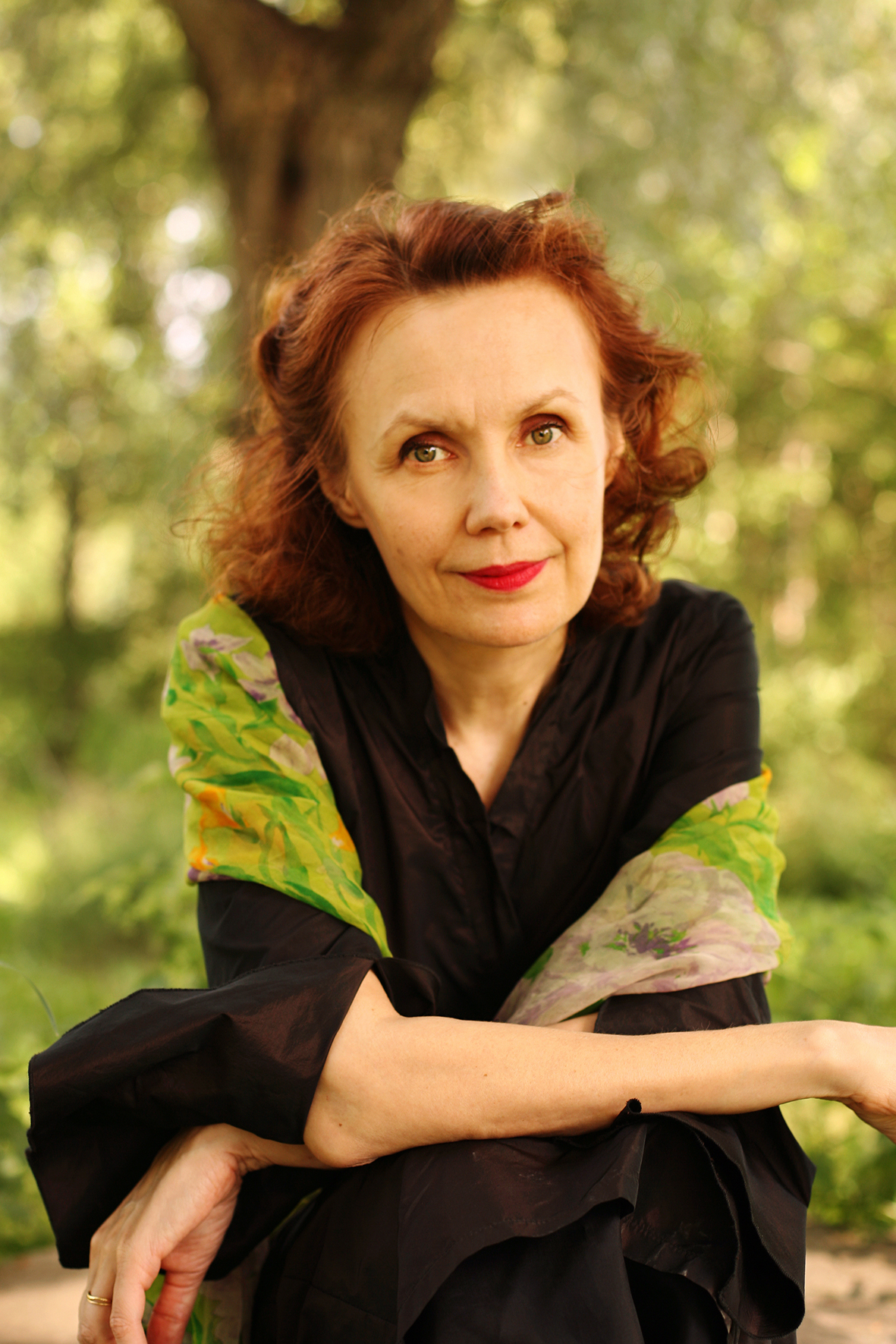
Kaija Saariaho
The Center's contributions to FinnFest do not end there.  We are excited to also host the residency of famed Finnish composer Kaija Saariaho, and to present a special Slee Sinfonietta / Ensemble SIGNAL concert  of some of the composer's most significant works on October 6.

Saariaho's music has always been marked by a fascination with color and texture, with timbre and harmony being the foundational elements.  While her earliest works showed the influence of late-modernist post-serialism—an idiom she eventually found to be constraining—her outlook shifted after being exposed to the music of Grisey and Murail while studying at Darmstadt.  As her aesthetic began to take shape during a period of research at IRCAM in Paris, Saariaho developed new expressive techniques based in analysis of the sonic spectra of instrumental sounds.  Her first computer-assisted composition was Lichtbogen, for 9 instruments and live electronics (1986), a piece whose point of departure lies in the spectrum of high harmonics which burst forth from a cello when bow pressure is increased (hence the title, which translates as "light-bow").

Paul Gauguin - NoaNoa
NoaNoa (1992), for flute and electronics, was composed in close collaboration with flautist Camilla Hoitenga, who will perform the work during next week's Sinfonietta concert.  The composer describes the work, which was inspired by the Paul Gauguin woodcut of the same title, as stemming from a desire to "write down, exaggerate, even abuse certain flute mannerisms that had been haunting me for some years."  The piece itself has become a key work in the contemporary flute repertoire and a signpost in the solo-instrument-plus-electronics genre.  Prés (1992), for solo 'cello and electronics, is also inspired by a Gauguin work (the painting, By the Sea), and pairs the string instrument with an electronic doppelgänger consisting of synthesized tones, manipulated 'cello sounds, and real-time processing of the live 'cello with resonant filters.  The piece will be played by SIGNAL executive director, Lauren Radnofsky.

The concert's most recent work is 2001's Aile du Songe, a concerto for flute, string orchestra, and percussion (also to be played by Hoitenga).  Like so much of the Saariaho's work, the piece is written in exquisitely detailed notations featuring harmonics, microtonal coloring, and a wealth of expressive markings.  Listeners will be privy to her slow timbral transformations as well as the sensitive lyricality which has been an increasingly present element in the composer's work since the late 1990s, when she began a series of operatic and vocal works.  Still marked by a sparsity characteristic of much of her earlier music, ("I don’t believe in austerity," the composer has said, "but I do [believe] in purity"), the work is sure to illustrate why the Denver Post has called "one of the most original compositional voices of our time."

The festival will include other intriguing musical events, including the Buffalo Chamber Music Society's hosting of the Carpe Diem String Quartet, who will perform a concert of Finnish works in Kleinhans' Mary Seaton room, including Sibelius's Andante Festivo, Rautavaara's first quartet, and Erkki Melartin's "The Sunflower."  In addition, Buffalo contemporary music ensemble Wooden Cities will present "A Kalevala Duo:  Playing Bones" a collaborative concert with performance artist Pia Lindman, which will feature the ancient Finnish technique of "bone-setting" set to music by recent UB-graduates Nathan Heidelberger and Brendan Fitzgerald.


Mivos Quartet
If that's not enough music for you, next week the Center will host the Mivos Quartet for a concert of new works for string quartet (including works by Taylor Brook, David Felder, Martin Stauning, and Helmut Lachenmann).  This concert (October 5) was rescheduled from last season after a blaze of Buffalonian thundersnow (read more about the program here), so don't miss your second chance to see these amazing works played by the quartet the Chicago Reader has called "one of America's most daring and ferocious new-music ensembles."

Wednesday, July 1, 2015

2014-15 Season Recap


The Slee Sinfonietta plays Ives's Three Places in New England
The Center's 2014-15 season has been an incredibly exciting one with lots of exciting concerts, including numerous premieres of new works by intrepid composers.  We saw several Slee Sinfonietta programs, including memorable performances of Elliott Carter's Triple Duo (with Ensemble SIGNAL), Charles Ives's Three Places in New England, and the production of Doug Fitch's magnificent "How Did We…?".  We had two fruitful residencies with the Mivos String Quartet and the Deviant Septet, and several visiting composers, including Larry Groupé, Rand Steiger, and Daniel Asia.

Last month, we capped off the season with the 40/30 anniversary of the June in Buffalo Festival, a vibrant week of new music that featured 16 concerts with nearly 80 adventurous new works performed—half of those by the 30 emerging composers in attendance.  The festival was a great success, a celebration of many years of great performances.  In a recent Wall Street Journal Article, author Allan Kozinn points out that, "It would be hard to name more than a handful of major composers of the past 30 years who have not appeared on its faculty roster."  Kozinn, impressed with the work of the festival's participant composers, elaborates:
[A] highlight of a Saturday afternoon program devoted to new student works was Mr. [Eric] Huebner's assured account of Music for a Mad Scientist—300+ Microvariations on a Bach Theme, an explosively virtuosic solo piano work by Texu Kim.  Mr. Kim […] hid his Bach theme amid intensely chromatic Lisztian thunder, at first.  But when the invigorating clatter briefly subsided, the score's internal joke became clear:  The work's theme is the gently arpeggiated C major Prelude that opens The Well-Tempered Clavier, Book I.  […]  Ying-Ting Lin's The Journey began murkily, with repeated bass tones in the piano punctuated by chordal bursts for bass clarinet and violin, but quickly grew into an engagingly varied, lively piece.  Liliya Ugay played the assertive, steely piano line in her own Third World Fable, but regularly ceded the spotlight, and some lovely, supple writing, to the violin and cello.  The student program's most satisfying work was its opener, Ryan Jesperson's Souvenirs/Miniatures, a tightly focused piano trio that—like Ms. Ugay's work, but with a different accent—juxtaposed tense, sharp-edge keyboard angularity with luminous string writing rooted in 19th-century shapeliness.
SIGNAL and the Slee Sinfonietta perform
David Felder's Les Quatre Temps Cardinaux
Kozinn also took note of Saturday night's stunning performance of David Felder's Les Quatre Temps Cardinaux by SIGNAL and the Slee Sinfonietta, under Brad Lubman's direction.  The chamber orchestra piece set poems by René Daumal, Pablo Neruda, Robert Creeley and Dana Gioia (read more about the work here), and featured vocal soloists Heather Buck and Ethan Herschenfeld, as well as video projections by Olivier Pasquet and 12 channels of electroacoustic sound:
The poems are heard not only in the spiky, emotionally intense vocal writing, but spoken on the recorded tracks, which also include percussion sounds and the sparkle, buzz and variegated growl of purely electronic timbres, all moving around a dozen speakers placed throughout the hall.  Abstract video by Olivier Pasquet added atmosphere rather than commentary.  All this could easily have become an exhibition of gimmickry, but Mr. Felder kept his grand audio-visual fabric focused, sober and often wrenching.
The festival saw not only great performances, but also seminars and masterclasses by its world-renowned faculty composers, which can be invaluable to emerging composers.  As noted in a recent UB Reporter article by this author:
The works of these faculty composers were featured in JiB's evening concerts, while the composers themselves gave morning seminars and consulted with participant composers in master classes.  "I am always eager to show my works to professors and peers, not to find confirmation but to collect 'data,'" says Chen.  "Then, at the end of the day, I sit down and do some 'data mining' for my future projects.  […]  JiB is only a week long, but its impact on me will surely last for years to come. I cannot wait for JiB 2016."
For those interested in learning more about the festival, be sure to check out our series of profiles of JiB artists on Edge of the Center, and visit the UB Music Library for an exhibit commemorating the festival's 40/30 anniversary, which is still on display.

Onward…

The Oerknal Ensemble will visit the Center next year
The gears are already in motion for next year's season.  We are excited that next year's events will include visits from guest composers Kaija Saariaho and Hanna Eimermacher, as well as residencies with several prominent new music ensembles, including Load Bang, Voxnova Italia/Project Isherwood, Ensemble Linea, and the Oerknal Ensemble.  We can also look forward to many spectacular Slee Sinfonietta concerts, and of course, June in Buffalo 2016, which will feature the following resident ensembles:  Arditti Quartet, Buffalo Philharmonic Orchestra, Ensemble Dal Niente, Ensemble SIGNAL, Slee Sinfonietta, Uusinta Ensemble.

Edge of the Center will announce more details on all of these events in the coming months.  It's already shaping up to be another incredible season featuring some of the most skilled performers in the city and from around the globe.


Robert and Carol Morris Center for 21st Century Music

2015-16 Schedule of Events


September 2015
Hanna Eimermacher
Visiting composer

October 5, 2015
Visiting composer

October 5, 2015
[Rescheduled concert]:
Program to include works by 
Brook, Felder, Lachenmann, Stauning

November 2015
Visiting ensemble
Evening performance and composer workshop

December 4-6
Visiting ensembles
Two evenings of concerts and composer workshop

April 2016
Visiting ensemble
Evening performance and composer workshop

May 2-5, 2016
Visiting Ensemble
Evening performance and composer workshop
Program to include works by 
Felder, Heidelberger, Nielson, Zorn
Slee Sinfonietta

October 6, 2015
Slee Sinfonietta Presents
Ensemble Signal
Brad Lubman, conductor
Camilla Hoitenga, flute
Featuring works by Kaija Saariaho and other Finnish Composers
Part of FinnFest in Buffalo, NY

April 21, 2016
Slee Sinfonietta
Program TBA


June in Buffalo 2016
June 6-13
David Felder, Artistic Director

Faculty Composers
Hanna Eimermacher
David Felder
Joshua Fineberg
Josh Levine

Resident Ensembles
Arditti Quartet
Buffalo Philharmonic Orchestra
Dal Niente
Ensemble Signal
Slee Sinfonietta
Uusinta Ensemble

Special Guests
Magnus Andersson
Brad Lubman

Thursday, November 13, 2014

Mivos Quartet Residency


Mivos Quartet
Next week, New York's Mivos Quartet will be in residency at the Center. The group that the Chicago Reader has called “one of America’s most daring and ferocious new-music ensembles” will bring their unique brand of musical ferocity to Buffalo for an evening of contemporary music, at which they'll perform works by Taylor Brook, David Felder, Martin Stauning, and Helmut Lachenmann.

Devoted to the performance of new works for string quartet, Mivos has worked with several international composers with a wide breadth of aesthetic perspectives.  The quartet has performed works by composers as diverse as Harrison Birtwistle, Philip Glass, Annie Gosfield, György Kurtág, Alex Mincek, Wolfgang Rihm, and UB's own David Felder and Tony Conrad.  Committed to the production of new works and the expanding of the string quartet repertoire, Mivos enjoys close collaboration with composers over extended periods.  Such collaborations have resulted in new works by composers such as Mark Barden, Dan Blake, Patrick Higgins, Scott Wollschleger, and Sam Pluta—whose Chain Reactions/Five Events for quartet and electronics can be heard below. As an ensemble dedicated to education, Mivos will begin their residency with a workshop for graduate composers in Baird Recital Hall (Nov. 19, 3:00pm).  The quartet will read pieces by UB composers Roberto Azaretto, Nathan Heidelberger, Su Lee, and Zane Merritt.


As a genre, the string quartet manages to combine the nimble agility of a chamber ensemble with the genteel historical respectability of the symphony orchestra.  Indeed, sometime during the twentieth century, the string quartet seemed to overtake the symphony as the key genre in which composers were most likely to articulate their musical manifestos, the pièces de résistance of their catalogs.  Think of Carter's third quartet and Crumb's Black Angels, or more recently, Thomas Adés Arcadiana and Haas's String Quartet No. 3 "In iij. Noct."—all of which, it's worth pointing out, are in Mivos's repertoire.  Since commissioning and premiering new music is a key part of the quartet's mission, Mivos is devoted to continuing this tradition, employing—in the words of the New York Classical Review's George Grella—"a physically, intellectually, and aesthetically energetic engagement with the high Modernist values of harmonic, gestural, and structural complexity."

Next week's concert will feature two works composed just last year:  Martin Stauning's delicate, gossamery Atmende Steine ("Breathing Stones") and Taylor Brook's just-intoned El jardín de senderos que se bifurcan.  The latter takes its title from the eponymous story by Borges, ("The Garden of Forking Paths"), which presents a conception of time in which all possible outcomes of any event simultaneously co-exist, evoking ideas of a hypertextual multiverse.  Brook's piece, winner of the quartet's 2014 Mivos/Kanter Prize, lives up to the ideas evoked by its title by drawing elements from a multiverse of traditions, including Japanese Gagaku, central African music, and free improvisation among others, endeavoring to create an "alternate history of music."

UB faculty composer David Felder will also be featured on the program.  Felder's first string quartet, Third Face, will finish out the first half.  Consisting mostly of aggressive, dramatic gestures separated by isolated islands of quiet, the piece was described by Andrew Porter in the New Yorker as "lucid, but with a controlled wildness in its making. Written for virtuosi, it challenges them by presenting its fierce, fertile ideas with almost reckless rhythmic and dynamic exuberance."  A brief excerpt can be heard below.


While the concert opens with Brook's imagined alternate musical history, Mivos will end the program with the third quartet by Helmut Lachenmann, a composer whose work has constantly commented on the historical traditions of European classical music, as well as the "aesthetic apparatus" of that music's social institutions and contingencies.  Certainly one of Lachenmann's most important works in the past 15 years, Grido ("cry") opens with gloriously strident sustained tones, before unfolding into a dense universe of complex harmonies, brilliantly vibrant tremolos, penetrating silence, and violent scratch tones.  The piece existentially scrutinizes the string quartet itself, as a genre, a medium, and a source of sonic material.

Mivos's program will thus cover all the extremes:  from the understated translucence of Stauning's piece to the  sinewy muscularity of Felder's.  And the concert will conclude with the strangely meta feat of a string quartet exploring the string quartet via a piece for string quartet, a musical Ouroboros of mind-bending composition and dazzling virtuosity not to be missed!

—Ethan Hayden


Mivos Quartet
Composer Workshop
November 19, 3:00pm
Baird Recital Hall
free admission

Concert
November 20, 7:30pm
Baird Recital Hall
$15 general, $10 seniors, free for all UB students